

Fact checked by Rebecca Thornton, M.S., Food Science and Human Nutrition
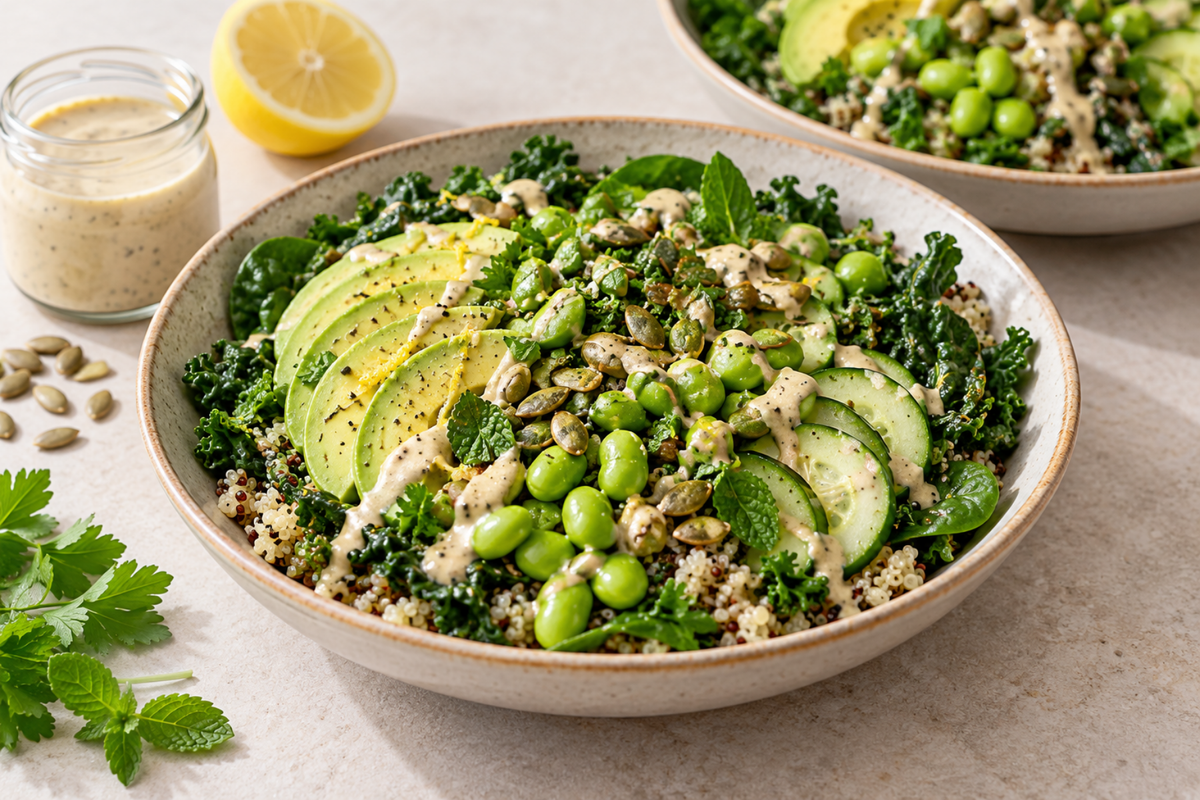
When you're craving steady energy by day and a sense of ease by night, this kale quinoa salad with avocado fits the moment. It layers dark leafy greens, creamy avocado, and seed-powered crunch for a satisfying lunch you can meal-prep in minutes. Think sunlit flavors, calm-focused fuel, and feel-good textures in every bite.
What's in This Post
- Why You'll Love This Recipe
- Ingredients You'll Need
- Ingredient Spotlights
- Step-by-Step Instructions
- Health Benefits
- Variations & Tips
- Key Takeaways
- FAQ
- Sources
Why You'll Love This Recipe
- Magnesium-forward meal: leafy greens, pumpkin seeds, tahini, and avocado support energy metabolism and calm muscle function.
- Creamy-crunchy balance: velvety avocado meets toasty seeds and fresh herbs for serious satisfaction.
- Meal-prep friendly: build 3 to 4 servings in advance with simple components that hold up.
- Bright, zesty flavor: the lemon-tahini dressing ties the whole salad together.
- Flexible macros: add edamame or tofu for more protein, or boost carbs with quinoa or buckwheat for long-lasting energy.
Ingredients You'll Need
Makes 3 to 4 servings.
For the salad
- 2 cups cooked quinoa (or buckwheat or millet)
- 4 cups baby spinach
- 2 cups lacinato kale, finely shredded (rib removed)
- 1 large ripe avocado, sliced
- 1 cup cooked, shelled edamame (or chickpeas)
- 1/2 English cucumber, thinly sliced
- 1/2 cup fresh parsley and mint, chopped
- 1/4 cup raw pumpkin seeds, lightly toasted
- 2 tablespoons hemp hearts (optional)
- 1 teaspoon lemon zest
For the lemon-tahini dressing
- 2 tablespoons extra-virgin olive oil
- 1 1/2 tablespoons tahini
- 2 tablespoons fresh lemon juice
- 1 teaspoon Dijon mustard
- 1 teaspoon maple syrup (or honey)
- 1/2 teaspoon fine sea salt, plus more to taste
- 6 to 8 grinds black pepper
- 1 to 2 tablespoons warm water, to thin
- Pinch red pepper flakes (optional)
Ingredient Spotlights
Leafy greens (spinach, kale): Rich in magnesium and natural nitrates that support healthy blood flow and exercise performance. Tender when massaged, they're a powerhouse base.
Avocado: Creamy, fiber-rich, and packed with potassium and monounsaturated fats for heart-smart satisfaction and steady energy.
Pumpkin seeds + tahini: A seed duo loaded with magnesium, zinc, and plant protein that helps promote calm muscles and post-meal satiety.
Step-by-Step Instructions
- Toast the seeds: In a dry skillet over medium heat, toast pumpkin seeds 3 to 4 minutes until fragrant and popping. Set aside.
- Make the dressing: In a jar, whisk olive oil, tahini, lemon juice, Dijon, maple, salt, and pepper. Whisk in warm water until pourable.
- Prep the greens: Add kale to a large bowl with a small pinch of salt and 1 teaspoon of dressing. Massage 30 to 60 seconds to soften. Fold in spinach.
- Build the base: Divide quinoa among bowls. Top with massaged greens.
- Add toppings: Arrange avocado, edamame, cucumber, and herbs. Sprinkle lemon zest, pumpkin seeds, and hemp hearts (if using).
- Dress and serve: Drizzle with lemon-tahini dressing, add black pepper and red pepper flakes to taste. Enjoy immediately or pack for meal prep.
Health Benefits
Magnesium and calm-focused energy: Pumpkin seeds, tahini, and leafy greens deliver magnesium, a cofactor in energy metabolism and neuromuscular function; supplemental magnesium has been shown to support sleep quality and relaxation in older adults [1]. Curious which foods deliver the most? See why magnesium supplements upset your stomach and the foods that may work better.
Heart-smart fats and satiety: Avocado offers monounsaturated fats and fiber that can support healthy lipid profiles and post-meal fullness in human trials [2, 3].
Circulation and electrolyte balance: Leafy greens supply dietary nitrates that help support endothelial function, and avocado contributes potassium, an electrolyte associated with healthy blood pressure regulation in meta-analyses of human studies [4, 5].
Variations & Tips
- Protein boost: Swap edamame for grilled tofu, tempeh, or a soft-boiled egg.
- Grain-free: Use riced cauliflower or shredded cabbage instead of quinoa.
- Nut/seed-free: Replace pumpkin seeds and tahini with chopped olives and extra herbs.
- Low-FODMAP tweak: Use firm tofu instead of edamame and omit Dijon if sensitive.
- Make-ahead: Store components separately up to 4 days; slice avocado just before serving or toss in lemon to minimize browning.
- Extra crunch: Spoon on a little of our Chili Crisp Pumpkin Seed Crunch in place of plain toasted seeds.
Key Takeaways
- Pumpkin seeds, tahini, spinach, and kale make this a magnesium-forward lunch.
- Massaging the kale with a little dressing softens it in under a minute.
- Store components separately for up to 4 days and slice the avocado just before eating.
- Add tofu, tempeh, or lentils for more protein.
Frequently Asked Questions
Can I use frozen edamame or spinach?
Yes. Thaw edamame and pat dry. Frozen spinach works; squeeze out water before adding so the salad stays crisp.
What can I substitute for quinoa?
Buckwheat, millet, or short-grain brown rice are great whole-grain swaps.
How do I keep avocado from browning in meal prep?
Slice right before eating, or toss in lemon juice and store tightly covered with parchment pressed onto the surface.
How can I make this higher in protein?
Add 1 cup tofu or tempeh per serving, or a scoop of cooked lentils. The dressing and seeds already add complementary protein.
Is this salad good after a workout?
Yes. Carbs from quinoa, minerals from greens, and protein from edamame support recovery and steady energy.
Make It This Week
Toast a batch of pumpkin seeds, shake up the dressing, and prep the components on Sunday so lunch is ready in two minutes all week. Want to know how much magnesium you need and which foods deliver the most? Read why magnesium supplements upset your stomach and the foods that may work better.
Sources
- Abbasi, B., Kimiagar, M., et al. (2012). The effect of magnesium supplementation on primary insomnia in elderly: A double-blind placebo-controlled clinical trial. Journal of Research in Medical Sciences, 17(12), 1161-1169. PubMed
- Wang, L., Bordi, P. L., Fleming, J. A., Hill, A. M., & Kris-Etherton, P. M. (2015). Effect of a moderate fat diet with and without avocados on lipoprotein particle number, size and subclasses in overweight and obese adults: A randomized, controlled trial. Journal of the American Heart Association, 4(1), e001355. PubMed
- Wien, M., Haddad, E., et al. (2013). A randomized 3x3 crossover study to evaluate the effect of Hass avocado intake on post-ingestive satiety, glucose and insulin levels, and subsequent energy intake in overweight adults. Nutrition Journal, 12, 155. PubMed
- Aburto, N. J., Hanson, S., et al. (2013). Effect of increased potassium intake on cardiovascular risk factors and disease: Systematic review and meta-analyses. BMJ, 346, f1378. PubMed
- Lara, J., Ashor, A. W., Oggioni, C., Ahluwalia, A., & Mathers, J. C. (2016). Effects of inorganic nitrate and beetroot supplementation on endothelial function: A systematic review and meta-analysis. European Journal of Nutrition, 55(2), 451-459. PubMed
These statements have not been evaluated by the Food and Drug Administration. This product is not intended to diagnose, treat, cure, or prevent any disease.
This content is for informational purposes only and is not medical advice. Talk with your healthcare provider before starting any new supplement, especially if you are pregnant, nursing, taking medication, or managing a health condition.


