

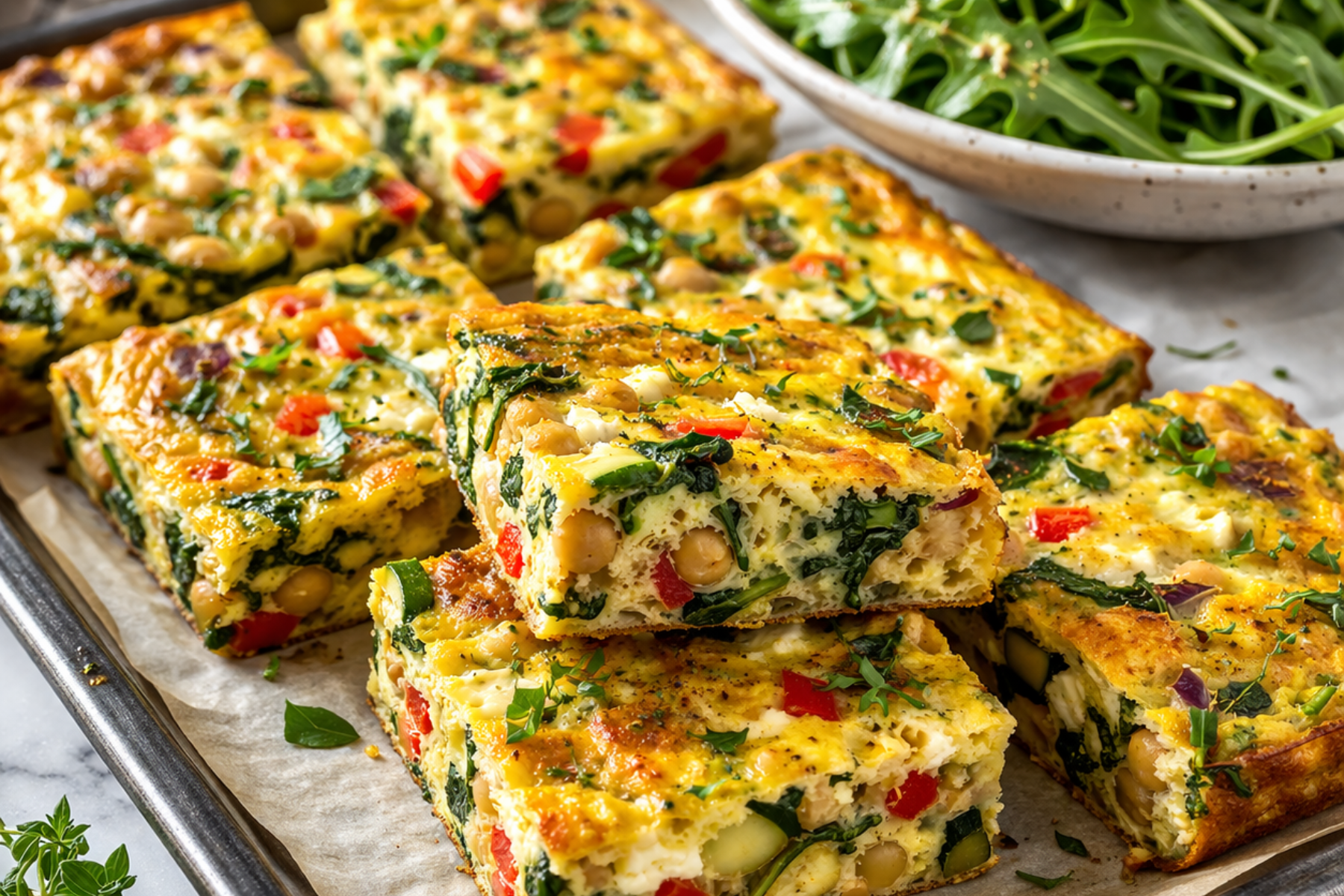
Love the feel of a blood-sugar-balanced lunch but want something you can eat with one hand? Meet these savory Frittata Squares—your non-bowl riff on the Blood-Sugar-Balancing Power Bowl for Lasting Afternoon Energy. Bake once, slice, and enjoy steady focus all afternoon.
Table of Contents
- Why You'll Love This Recipe
- Ingredients You'll Need
- Ingredient Spotlights
- Step-by-Step Instructions
- Health Benefits
- Variations & Tips
- FAQ
- References
Why You'll Love This Recipe
- One-pan prep: A sheet-pan frittata that packs protein, fiber, and greens for lasting afternoon energy.
- Blood-sugar-friendly format: Eggs + chickpeas + veggies support a steadier post-meal glucose response and satiety.
- Portable meal: Slice into squares for lunchboxes, snack plates, or a quick desk-friendly meal.
- Customizable: Add herbs, swap greens, or finish with a tangy arugula–ACV side to level up your plate.
- Make once, eat thrice: Keeps beautifully for 3–4 days for effortless meal prep.
Ingredients You'll Need
Makes 8 squares (4–6 servings)
- 10 large eggs
- 1/3 cup unsweetened milk (dairy or unsweetened almond)
- 1 cup cooked chickpeas, well-rinsed if canned
- 2 cups baby spinach, chopped
- 1 small red bell pepper, diced
- 1 small zucchini, diced
- 1/3 cup red onion, finely diced (optional; use green tops for lower FODMAP)
- 2 tablespoons extra-virgin olive oil, divided
- 1 teaspoon Dijon mustard
- 1/2 teaspoon turmeric
- 1/2 teaspoon dried oregano
- 1/2 teaspoon fine sea salt
- 1/4 teaspoon black pepper
- Optional: 1/3 cup crumbled feta or goat cheese
Quick arugula side (optional but recommended)
- 3 cups baby arugula
- 1 tablespoon apple cider vinegar
- 1 tablespoon extra-virgin olive oil
- Pinch salt and pepper
Ingredient Spotlights
- Eggs: High-quality protein helps promote satiety and stable energy compared with lower-protein meals [6,7].
- Chickpeas: Pulses provide fiber and slowly digested carbohydrates that can temper post-meal glucose responses [3].
- Apple Cider Vinegar (side salad): A simple ACV dressing alongside a carb-containing meal has been shown to modestly blunt postprandial glucose and insulin responses [1].
Step-by-Step Instructions
- Prep the pan and oven: Preheat oven to 375°F (190°C). Lightly oil a rimmed 9×13-inch sheet pan or baking dish with 1 tablespoon olive oil. Line with parchment for easy release if desired.
- Sauté the veggies: Warm remaining 1 tablespoon olive oil in a skillet over medium heat. Sauté onion 2–3 minutes (if using), then add bell pepper and zucchini; cook 3–4 minutes until just tender. Stir in spinach to wilt (30–60 seconds). Cool slightly.
- Whisk the egg mixture: In a large bowl, whisk eggs, milk, Dijon, turmeric, oregano, salt, and pepper until well combined. Fold in sautéed veggies, chickpeas, and cheese if using.
- Bake: Pour mixture into the prepared pan. Bake 18–22 minutes, until the center is set and edges are lightly golden. Rest 5 minutes, then slice into 8 squares.
- Optional ACV arugula finish: Toss arugula with apple cider vinegar, olive oil, salt, and pepper. Serve a handful alongside for a bright, blood-sugar-friendly pairing.
- Store: Refrigerate squares in an airtight container up to 4 days. Enjoy warm, room temp, or chilled.
Health Benefits
- Protein-forward, crash-resistant: Eggs provide complete protein to support satiety and steady energy compared with lower-protein meals [6,7].
- Pulse power: Chickpea fiber and resistant starch support a smoother post-meal glucose curve and help you stay fuller longer [3].
- Smart sides for smart glycemia: Pairing your slice with a simple arugula + ACV salad can modestly support a healthier postprandial glucose and insulin response [1].
Variations & Tips
- Dairy-free: Omit cheese and use unsweetened almond or oat milk.
- Veggie swaps: Use kale, chard, or mushrooms in place of spinach and zucchini.
- Spice it up: Add smoked paprika or cumin in place of oregano; garnish with fresh herbs.
- Higher fiber: Stir in 1–2 tablespoons ground flax or hemp seeds before baking.
- Make it a meal: Serve with 1/2 cup cooked quinoa or roasted sweet potato wedges and the ACV arugula for extra staying power.
FAQ
Q: Can I freeze these frittata squares?
A: Yes. Cool completely, wrap individually, and freeze up to 2 months. Reheat at 325°F (163°C) for 10–12 minutes.
Q: Are chickpeas necessary?
A: They add fiber and texture, but you can sub white beans, black beans, or omit and serve with a fiber-rich side like quinoa or a salad.
Q: How do I keep them from getting watery?
A: Sauté watery veggies (zucchini, mushrooms, spinach) first and let them steam off excess moisture before mixing with eggs.
Q: Can I make this lower FODMAP?
A: Skip onion (use green tops), limit chickpeas to 1/2 cup across the batch, and load up on low-FODMAP veggies like bell pepper and spinach.
Q: Can I add supplements to the batter?
A: We recommend keeping supplements separate. If you use them, take NourishingNutrients Glucose Balance+ with your meal as directed to support healthy glucose metabolism—no need to bake it in.
References
[1] Östman, E., Granfeldt, Y., Persson, L., & Björck, I. (2005). Vinegar supplementation lowers glucose and insulin responses and increases satiety after a bread meal in healthy subjects. European Journal of Clinical Nutrition, 59(9), 983–988. https://doi.org/10.1038/sj.ejcn.1602197
[3] Mollard, R. C., Luhovyy, B. L., Panahi, S., Nunez, M., & Anderson, G. H. (2012). The acute effects of a pulse-containing meal on glycaemic responses. British Journal of Nutrition, 108(S1), S91–S98. ResearchGate
[6] Westerterp-Plantenga, M. S., Lemmens, S. G., & Westerterp, K. R. (2012). Dietary protein—its role in satiety, energetics, weight loss and health. British Journal of Nutrition, 108(S2), S105–S112. Cambridge
[7] Ratliff, J., Leite, J. O., de Ogburn, R., Faria, G. M., & Puglisi, M. J. (2010). Consuming eggs for breakfast influences plasma glucose and ghrelin, while reducing energy intake during the next 24 hours in adult men. Nutrition Research, 30(2), 96–103. PubMed


