

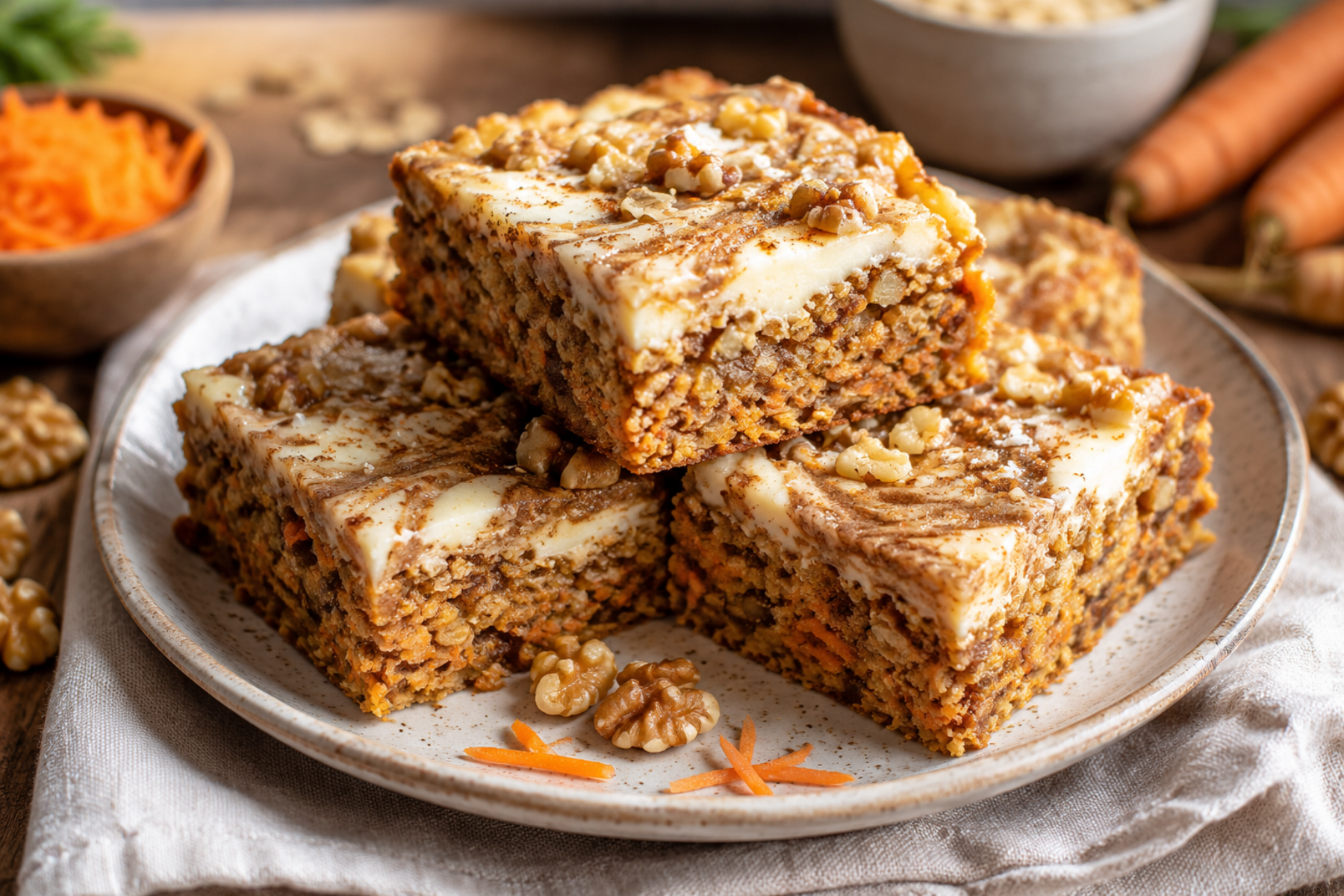
If carrot cake and cheesecake had a breakfast baby, this would be it.
These Carrot Cake Cheesecake Breakfast Bars layer warmly spiced oats, shredded carrots, cinnamon, walnuts, and a creamy cheesecake swirl into a soft-baked breakfast that feels indulgent without the sugar crash. They're rich enough to satisfy dessert cravings but balanced enough to help fuel busy mornings with fiber, healthy fats, and steady energy.
As they aren't high enough in protein on their own, we recommend pairing them with a side of eggs or extra yogurt for an extra satiety boost.
Perfect for meal prep, afternoon coffee breaks, or grab-and-go breakfast sides, these bars bring cozy bakery flavor into a smarter everyday routine.
Table of Contents
- Why You'll Love This Recipe
- Ingredients You'll Need
- Ingredient Spotlights
- Step-by-Step Instructions
- Health Benefits
- Variations & Tips
- FAQ
- References
Why You'll Love This Recipe
- Dessert-for-breakfast vibes — Creamy cheesecake swirls + warm carrot cake spices make these bars feel incredibly indulgent.
- Balanced energy — Rolled oats, walnuts, chia, and carrots provide fiber and healthy fats to help support steadier mornings.
- Meal-prep friendly — Bake once and enjoy nourishing grab-and-go breakfasts all week.
- Naturally sweetened — Maple syrup and carrots bring natural sweetness without overwhelming sugar.
- Freezer-friendly — Make a double batch and freeze extras for busy mornings.
Ingredients You'll Need
Carrot Cake Oat Base
- 2 cups (180 g) old-fashioned rolled oats
- 1 tsp baking powder
- 1½ tsp ground cinnamon
- ½ tsp ground ginger
- ¼ tsp ground nutmeg
- Pinch of sea salt
- 2 tbsp chia seeds
- ½ cup (50 g) finely shredded carrots
- ⅓ cup (35 g) chopped walnuts
- 2 large eggs
- ½ cup (120 ml) unsweetened milk of choice
- ¼ cup pure maple syrup
- 1 tsp pure vanilla extract
- 2 tbsp melted coconut oil or avocado oil
Cheesecake Swirl
- 4 oz (115 g) cream cheese, softened
- ¼ cup (60 g) plain Greek yogurt
- 1 tbsp maple syrup
- ½ tsp vanilla extract
Optional Toppings
- Extra walnuts
- Cinnamon dusting
- Unsweetened coconut flakes
Ingredient Spotlights
Oats
Rolled oats provide beta-glucan fiber that supports satiety, digestive health, and healthy cholesterol levels as part of a balanced diet. [1]
Carrots
Carrots contain beta-carotene and polyphenols that support antioxidant activity and overall wellness.
Walnuts
Walnuts deliver plant-based omega-3 fats and polyphenols associated with cardiovascular support and healthy inflammatory balance. [2]
Cinnamon
Cinnamon adds warmth while also being studied for its potential role in healthy glucose metabolism. [3]
Step-by-Step Instructions
- Prep the oven — Preheat oven to 350°F (175°C). Line an 8x8-inch baking pan with parchment paper.
- Mix dry ingredients — In a large bowl, combine oats, baking powder, cinnamon, ginger, nutmeg, salt, chia seeds, shredded carrots, and walnuts.
- Mix wet ingredients — In a separate bowl, whisk eggs, milk, maple syrup, vanilla, and melted oil until smooth.
- Combine — Pour wet ingredients into dry ingredients and stir until fully combined. Let sit 3–5 minutes so the oats and chia slightly hydrate.
- Make cheesecake swirl — In a small bowl, mix cream cheese, Greek yogurt, maple syrup, and vanilla until creamy.
- Assemble — Spread oat mixture evenly into prepared pan. Dollop cheesecake mixture over the top and gently swirl with a knife.
- Bake — Bake 28–34 minutes or until the center is set and edges are lightly golden.
- Cool — Let cool completely before slicing into bars. Refrigerate for cleaner slices and a cheesecake-like texture.
Health Benefits
- Fiber-rich oats support steady energy — Oat beta-glucan fiber helps slow digestion and supports balanced cholesterol levels as part of a heart-supportive eating pattern. [1]
- Walnuts provide healthy fats — Walnuts contain ALA omega-3 fats and polyphenols associated with cardiovascular and brain health support. [2]
- Carrots add antioxidant compounds — Carrots provide carotenoids that support antioxidant defenses and overall wellness.
- Balanced breakfast structure — The combination of protein, fiber, and healthy fats may help reduce mid-morning crashes compared to refined breakfast pastries.
Variations & Tips
- Higher protein — Add 1 scoop vanilla protein powder and an extra splash of milk.
- Dairy-free — Use dairy-free cream cheese and coconut yogurt.
- Extra carrot cake flavor — Add raisins or unsweetened shredded coconut.
- Lower sugar — Reduce maple syrup slightly and rely more on carrots for sweetness.
- Meal prep tip — Store refrigerated for up to 5 days or freeze individually wrapped bars.
FAQ
Q: Can I make these gluten-free?
A: Yes. Use certified gluten-free rolled oats.
Q: Can I freeze these breakfast bars?
A: Absolutely. Wrap individually and freeze up to 2 months.
Q: Do these taste overly healthy?
A: Not at all. They taste much closer to carrot cake cheesecake than traditional baked oatmeal bars.
Q: Can I use quick oats?
A: You can, but the bars will be softer and less textured.
Q: What's the best way to serve them?
A: Cold for a cheesecake texture, or slightly warmed for cozy carrot cake vibes.
Q: Can I pair this with a supplement?
A: Many people pair balanced breakfasts with omega-3s, probiotics, or polyphenol-rich supplements as part of a wellness-focused routine. Consider Nourishing Nutrients' targeted formulas alongside a food-first lifestyle.
References
- Whitehead, A., Beck, E. J., Tosh, S., & Wolever, T. M. S. (2014). Cholesterol-lowering effects of oat β-glucan: A meta-analysis of randomized controlled trials. American Journal of Clinical Nutrition, 100(6), 1413–1421. https://pubmed.ncbi.nlm.nih.gov/25411276/
- Banel, D. K., & Hu, F. B. (2009). Effects of walnut consumption on blood lipids and other cardiovascular risk factors: A meta-analysis and systematic review. American Journal of Clinical Nutrition, 90(1), 56–63. https://pubmed.ncbi.nlm.nih.gov/19458020/
- Allen, R. W., Schwartzman, E., Baker, W. L., Coleman, C. I., & Phung, O. J. (2013). Cinnamon use in type 2 diabetes: An updated systematic review and meta-analysis. Annals of Family Medicine, 11(5), 452–459. https://pubmed.ncbi.nlm.nih.gov/24019277/


