

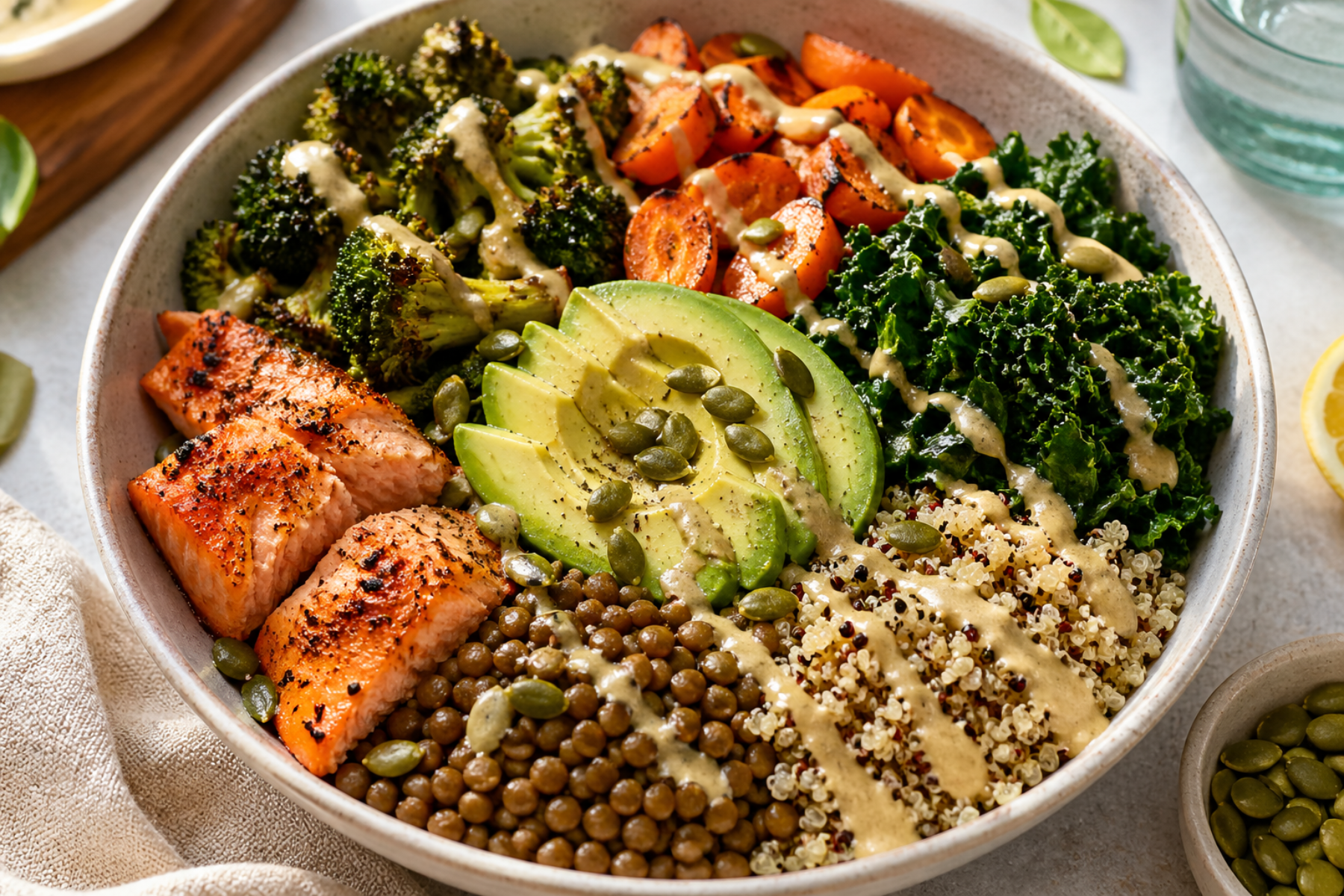
Afternoons don't have to come with a slump. This Blood-Sugar-Balancing Power Bowl for Lasting Afternoon Energy layers slow-digesting carbs, lean protein, and healthy fats for a steady, focused feel—no crash required. It's a meal-prep hero you'll actually crave on busy weekdays.
Table of Contents
- Why You'll Love This Recipe
- Ingredients You'll Need
- Ingredient Spotlights
- Step-by-Step Instructions
- Health Benefits
- Variations & Tips
- FAQ
- References
- Call to Action
Why You'll Love This Recipe
- Built for stable energy: This blood-sugar-balancing power bowl combines protein, fiber, and healthy fats to support a steady post-meal glucose response.
- Meal-prep friendly: Make 4 bowls at once for grab-and-go, lasting afternoon energy all week.
- Deliciously nutrient-dense: Roasted veggies, lentils, quinoa, avocado, and a lemon–tahini–ACV drizzle deliver big flavor and nourishment.
- Naturally gluten-free and dairy-free: Whole-food ingredients fit many lifestyles with easy swaps.
- Evidence-aligned: Includes fibers, pulses, and vinegar linked to healthier postprandial responses and satiety [1–4].
Ingredients You'll Need
Serves 4
- 1 cup dry quinoa, rinsed (yields ~2 cups cooked)
- 1 cup dry green or French lentils, rinsed (yields ~2–2½ cups cooked)
- 1 large head broccoli, cut into florets (about 4 cups)
- 3 medium carrots, sliced on the bias
- 4 packed cups chopped kale (stems removed), or baby kale
- 1 large ripe avocado, sliced
- 1/4 cup raw pumpkin seeds (pepitas)
- 2 tablespoons extra-virgin olive oil
- 1/2 teaspoon fine sea salt, divided
- Freshly ground black pepper, to taste
Lemon–Tahini–Cinnamon Dressing
- 1/3 cup tahini
- 1/4 cup fresh lemon juice
- 1 tablespoon apple cider vinegar (with the "mother" if available)
- 1 tablespoon extra-virgin olive oil
- 1 teaspoon Dijon mustard
- 1 small garlic clove, grated
- 1/2 teaspoon ground cinnamon
- 2–4 tablespoons water, to thin
- Pinch fine sea salt
Optional Protein Boosts (choose one, 12–16 oz total cooked)
Roasted salmon, grilled chicken breast, or baked tofu/tempeh
Ingredient Spotlights
- Lentils: Pulses offer protein, resistant starch, and soluble fiber that help blunt post-meal glucose spikes and promote satiety [3].
- Apple Cider Vinegar: A tablespoon with meals can modestly support a healthier postprandial glucose and insulin response in clinical studies [1].
- Cinnamon: May slow gastric emptying and modestly smooth post-meal glucose curves while enhancing perceived fullness in healthy adults [2].
Step-by-Step Instructions
- Cook the quinoa: Combine rinsed quinoa with 2 cups water and a pinch of salt in a saucepan. Bring to a boil, cover, reduce heat, and simmer 12–15 minutes until fluffy. Rest 5 minutes, then fluff.
- Cook the lentils: In a separate pot, add lentils and 3 cups water. Bring to a simmer and cook 18–22 minutes until just tender. Drain and season with a pinch of salt and pepper.
- Roast the vegetables: Preheat oven to 425°F (218°C). Toss broccoli and carrots with 2 tablespoons olive oil, 1/4 teaspoon salt, and pepper. Spread on a sheet pan and roast 18–22 minutes, stirring once, until edges are caramelized.
- Prep the greens: Place chopped kale in a large bowl with a pinch of salt and 1 teaspoon olive oil (optional). Massage 30–60 seconds to soften. If using baby kale, skip massaging.
- Make the dressing: Whisk tahini, lemon juice, apple cider vinegar, olive oil, Dijon, garlic, cinnamon, salt, and 2–4 tablespoons water until creamy and pourable.
- Assemble: Divide quinoa, lentils, roasted veggies, and kale among 4 bowls. Top with avocado slices and pumpkin seeds. Add optional protein. Drizzle generously with dressing.
- Serve or store: Enjoy warm or at room temp. Refrigerate components in airtight containers up to 4 days; add avocado and dressing just before serving.
Health Benefits
- Fiber + protein synergy: Lentils, quinoa, and vegetables deliver viscous and fermentable fibers with plant protein that support slower glucose absorption and steadier energy after meals [3,5]. Adequate protein also promotes fullness to help reduce energy dips later [6].
- Smart dressings matter: Apple cider vinegar in the dressing has been shown to modestly reduce post-meal glucose and insulin responses when consumed with carbohydrate-rich foods [1]. Cinnamon may further temper postprandial glucose and promote satiety in healthy adults [2].
- Healthy fats for staying power: Avocado, tahini, and olive oil provide monounsaturated and sesame lignans that help slow gastric emptying and support stable energy and satisfaction between meals [4].
Variations & Tips
- Grain swap: Use farro or barley (if not gluten-free) for extra chew; or brown rice if preferred.
- Pulse swap: Use canned low-sodium chickpeas or black beans (drained, rinsed).
- Greens option: Baby spinach or arugula work in place of kale.
- Protein add-ins: Flaked salmon, grilled chicken, crisped tofu, or a soft-boiled egg per bowl.
- Make it nut/seed-free: Omit pumpkin seeds and tahini; swap a yogurt–lemon dressing if dairy is tolerated.
FAQ
Q: Can I make this bowl without quinoa?
A: Yes—try cauliflower rice, brown rice, farro, or a double portion of lentils for a grain-free or higher-protein version.
Q: How do I meal-prep for the week?
A: Portion quinoa, lentils, and roasted veggies into 4 containers. Pack dressing separately. Add avocado and seeds just before eating for best texture.
Q: Is this recipe gluten-free and dairy-free?
A: Yes, as written it's naturally gluten- and dairy-free. If swapping grains, choose certified gluten-free options.
Q: Can I use canned lentils?
A: Absolutely. Drain and rinse well; you'll need about 2–2½ cups cooked lentils for 4 servings.
Q: How can I lower FODMAPs?
A: Use canned, well-rinsed lentils; swap broccoli for roasted zucchini or green beans; and use garlic-infused oil instead of fresh garlic.
Q: Can I add a supplement to the dressing?
A: We keep this bowl food-first. If you use supplements, consider taking NourishingNutrients Glucose Balance+ with your meal as directed to support healthy glucose metabolism—no need to mix into the food.
References
- Östman, E., Granfeldt, Y., Persson, L., & Björck, I. (2005). Vinegar supplementation lowers glucose and insulin responses and increases satiety after a bread meal in healthy subjects. European Journal of Clinical Nutrition, 59(9), 983–988. https://doi.org/10.1038/sj.ejcn.1602197
- Hlebowicz, J., Darwiche, G., Björgell, O., & Almér, L. O. (2007). Effect of cinnamon on postprandial blood glucose, gastric emptying, and satiety in healthy subjects. American Journal of Clinical Nutrition, 85(6), 1552–1556. https://doi.org/10.1093/ajcn/85.6.1552
- Mollard, R. C., Luhovyy, B. L., Panahi, S., Nunez, M., & Anderson, G. H. (2012). The acute effects of a pulse-containing meal on glycaemic responses. British Journal of Nutrition, 108(S1), S91–S98. ResearchGate
- Wien, M., Haddad, E., Oda, K., Sabaté, J., & Cole, S. E. (2013). A moderate-fat avocado-based lunch improves satiety and reduces postprandial insulin compared to a high-carbohydrate meal. Nutrition Journal, 12, 155. PMC
- Jenkins, D. J. A., Wolever, T. M. S., Taylor, R. H., et al. (1981). Glycemic index of foods: A physiological basis for carbohydrate exchange. American Journal of Clinical Nutrition, 34(3), 362–366. PubMed
- Westerterp-Plantenga, M. S., Lemmens, S. G., & Westerterp, K. R. (2012). Dietary protein—its role in satiety, energetics, weight loss and health. British Journal of Nutrition, 108(S2), S105–S112. Cambridge


