

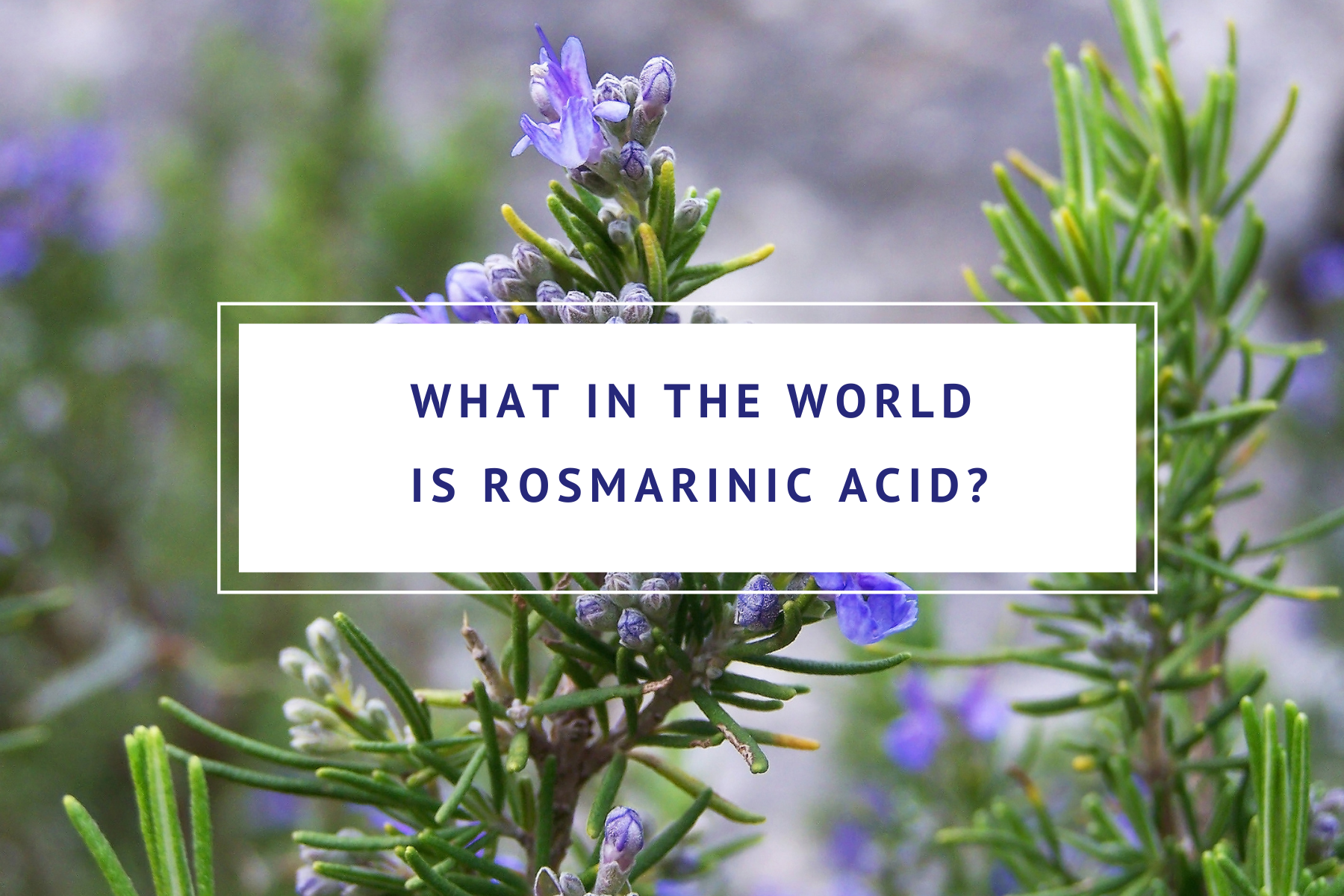
Sick of feeling run-down, foggy, or like your body isn't operating at full power? For thousands of years, people have turned to rosemary for clarity, vitality, and overall balance. What ancient cultures did not know is why rosemary worked so well.
Today, we do.
Modern science has revealed that rosemary's most important compound—rosmarinic acid—is a powerful plant polyphenol found not only in rosemary but also in perilla seeds, lemon balm, basil, oregano, and other members of the mint family.
Rosmarinic acid is now one of the most studied herbal constituents for supporting immune balance, antioxidant activity, and cognitive performance.
This article explores rosemary's history, the discovery of rosmarinic acid, where it naturally occurs, and what research shows about how it supports the body.
What Is Rosemary?
Rosemary (Rosmarinus officinalis) is an evergreen shrub native to the Mediterranean. Across cultures, it has been used to support:
- Mental clarity
- Energy and vitality
- Digestive comfort
- Circulation
- Emotional balance
Its most researched constituents include:
- Rosmarinic acid
- Carnosic acid
- Carnosol
- Essential oils, especially 1,8-cineole
But among all its phytonutrients, rosmarinic acid is considered the star.
Where Else Is Rosmarinic Acid Found?
Rosmarinic acid is widely distributed throughout the mint family (Lamiaceae). Besides rosemary, significant natural sources include:
- Perilla seeds
- Lemon balm (Melissa officinalis)
- Basil
- Oregano
- Sage
- Thyme
- Mint

Perilla seeds, from the perilla plant (also known as the beefsteak plant), contain high concentrations of rosmarinic acid, making them an excellent supplemental source.
The Discovery of Rosmarinic Acid
Rosmarinic acid was first isolated in 1958 by Italian chemists studying rosemary's traditional benefits. Since then, its structure, biological actions, and safety have been extensively studied.
Today, rosmarinic acid is recognized for supporting:
- Immune balance
- Antioxidant defenses
- Cognitive clarity
- Normal inflammatory pathways
It is one of the most researched polyphenols in herbal science.
A Look at Rosemary Through History …and How It Connects to Rosmarinic Acid
Ancient Mediterranean Civilizations
Greeks and Romans burned rosemary in homes and temples. They believed it supported:
- Clarity
- Memory
- Energy
- Protection
Students wore rosemary garlands while studying — long before neuroscience discovered that rosmarinic acid and rosemary essential oils support neural signaling and alertness.
Traditional Healing Practices
- European herbalism: digestion, circulation, mood support
- Ayurveda: vitality and warmth
- TCM: movement and energetic balance
Mythology and Literature
- Symbol of love and vitality connected to Aphrodite
- Shakespeare famously wrote: "There's rosemary, that's for remembrance"
These historic intuitions align with what research now shows about rosmarinic acid's role in supporting the nervous system [1, 7].
What Modern Science Says About Rosmarinic Acid
Most of the benefits historically attributed to rosemary—better clarity, mood, vitality, and balance—are now associated with rosmarinic acid, its primary polyphenol.
Scientific interest focuses on its:
- Antioxidant activity
- Immune-modulating effects
- Neural support
- Inflammatory pathway balance
Let's break it down:
1. Antioxidant Support
Rosmarinic acid supports the body's antioxidant systems by helping neutralize free radicals and supporting cellular protection mechanisms [1].
Bottom line: It helps the body manage daily oxidative stress from lifestyle, metabolism, and environment.
2. Cognitive Support and Nervous System Balance
Human Evidence
A randomized trial found that rosemary aroma—rich in volatile compounds that interact with the nervous system—supported memory performance, alertness, and mood [3].
Mechanistic Evidence
Reviews show rosmarinic acid and rosemary constituents support:
- Healthy neural signaling
- Neurotransmitter balance
- Brain cell resilience
- Normal nervous system activity [1, 7]
Another human study found inhaled rosemary oil influenced autonomic activity and subjective alertness [8].
Bottom line: Rosmarinic acid and rosemary's aromatic compounds may help support mental clarity and focus.
3. Immune Support
A review of rosemary's phytochemistry highlights that rosmarinic acid supports balanced inflammatory signaling and normal immune-cell activity [2].
Another study shows that rosemary extracts—and rosmarinic acid specifically—support healthy activity in cells involved in immune protection [4].
Bottom line: Rosmarinic acid helps maintain a balanced immune response.
4. Inflammatory Pathway Support
Carnosol (another rosemary component) supports normal inflammatory pathways by influencing COX-2 transcription [5], while rosmarinic acid supports upstream inflammatory signaling [2, 4].
Bottom line: Rosmarinic acid helps support healthy inflammatory balance important for comfort and resilience.
5. Metabolic and Liver Support
Rosmarinic acid–rich rosemary extract supports healthy liver antioxidant capacity in oxidative stress models [6].
Bottom line: Rosmarinic acid may support normal metabolic and liver antioxidant balance.
6. Digestive Comfort
Rosmarinic acid–containing herbs traditionally supported digestion. Rosemary oils may help:
- Support comfortable digestion
- Promote normal bile flow
- Maintain healthy gut motility
Polyphenols like rosmarinic acid also help maintain microbial balance [2].
Bottom line: Rosmarinic acid may support digestive comfort after meals.
7. Healthy Cognitive Aging
Rosmarinic acid supports:
- Neuroprotective pathways
- Brain cell resilience
- Memory circuits under oxidative stress [1, 7]
Bottom line: It may help support long-term brain health.
Potential Benefits of Rosmarinic Acid Extract
Unlike rosemary seasoning, rosmarinic acid extract provides a concentrated dose of the key compound responsible for many of rosemary's researched benefits.
1. Supports Healthy Immune Function
Helps maintain balanced immune activity and normal inflammatory signaling [2, 4].
2. Supports Cognitive Performance
Helps protect brain cells from oxidative stress and supports mental clarity and alertness [1, 3, 7, 8].
3. Strong Antioxidant Support
Rosmarinic acid is a robust antioxidant that supports natural cellular defenses [1, 2].
4. Supports Normal Inflammatory Balance
Helps maintain healthy inflammatory pathways important for comfort and wellbeing [4, 5].
What Rosmarinic Acid Extract Really Does
- Helps your body manage everyday oxidative stress*
- Supports balanced immune and inflammatory responses*
- May support clarity, focus, and nervous system performance*
- Helps protect cells from daily wear and tear*
- Found naturally in rosemary, perilla seeds, and other herbs — but concentrated most effectively in extract form
Frequently Asked Questions
Is rosemary safe?
Rosemary is generally recognized as safe in culinary uses. Extracts should be taken as directed.
What does rosmarinic acid do in the body?
It supports antioxidant activity, immune balance, and healthy inflammatory responses.
Is rosmarinic acid only found in rosemary?
No. It is also found in perilla seeds, lemon balm, basil, mint, oregano, and other herbs.
Why use rosmarinic acid extract instead of rosemary?
Extracts contain higher, standardized levels of the active compound that research focuses on.
Does rosemary support cognitive health?
Human studies show rosemary's aroma and compounds may support cognitive performance and alertness.
FDA & Healthcare Disclaimer
*This content is for educational purposes only. It is not intended to diagnose, treat, cure, or prevent any disease. Always speak with your healthcare provider before starting any new supplement, especially if you are pregnant, nursing, have a medical condition, or take medications.
Works Cited
- Habtemariam, S. (2018). Molecular Pharmacology of Rosmarinic and Salvianolic Acids: Potential Seeds for Alzheimer's and Vascular Dementia Drugs. International Journal of Molecular Sciences, 19(2), 458. https://doi.org/10.3390/ijms19020458
- Andrade, J. M., Faustino, C., Garcia, C., Ladeiras, D., Reis, C. P., & Rijo, P. (2018). Rosmarinus officinalis L.: An update review of its phytochemistry and biological activity. Future Science OA, 4(4), FSO283. https://doi.org/10.4155/fsoa-2017-0124
- Moss, M., Cook, J., Wesnes, K., & Duckett, P. (2003). Aromas of rosemary and lavender essential oils differentially affect cognition and mood in healthy adults. International Journal of Neuroscience, 113(1), 15–38. https://doi.org/10.1080/00207450390161903
- Yesil-Celiktas, O., Sevimli, C., Bedir, E., & Vardar-Sukan, F. (2010). Inhibitory effects of rosemary extracts, carnosic acid and rosmarinic acid on the growth of various human cancer cell lines. Plant Foods for Human Nutrition, 65(2), 158–163. https://doi.org/10.1007/s11130-010-0166-4
- Lo, A. H., Liang, Y. C., Lin-Shiau, S. Y., Ho, C. T., & Lin, J. K. (2002). Carnosol, an antioxidant in rosemary, suppresses COX-2 transcription by targeting p38, ERK, and NF-κB pathways in inducible cells. Journal of Agricultural and Food Chemistry, 50(21), 5283–5289.
- Sotelo-Félix, J. I., Martinez-Fong, D., Muriel, P., Santillán, R. L., Castillo, D., & Yahuaca, P. (2002). Evaluation of the effectiveness of Rosmarinus officinalis (Lamiaceae) in hepatic oxidative stress. Journal of Ethnopharmacology, 81(2), 145–154.
- Ghasemzadeh Rahbardar, M., & Hosseinzadeh, H. (2020). Therapeutic effects of rosemary (Rosmarinus officinalis L.) and its active constituents on nervous system disorders. Iranian Journal of Basic Medical Sciences, 23(9), 1100–1112.
- Sayorwan, W., Ruangrungsi, N., Piriyapunyporn, T., Hongratanaworakit, T., Kotchabhakdi, N., & Siripornpanich, V. (2013). Effects of inhaled rosemary oil on subjective feelings and activities of the nervous system. Scientia Pharmaceutica, 81(2), 531–542.


