

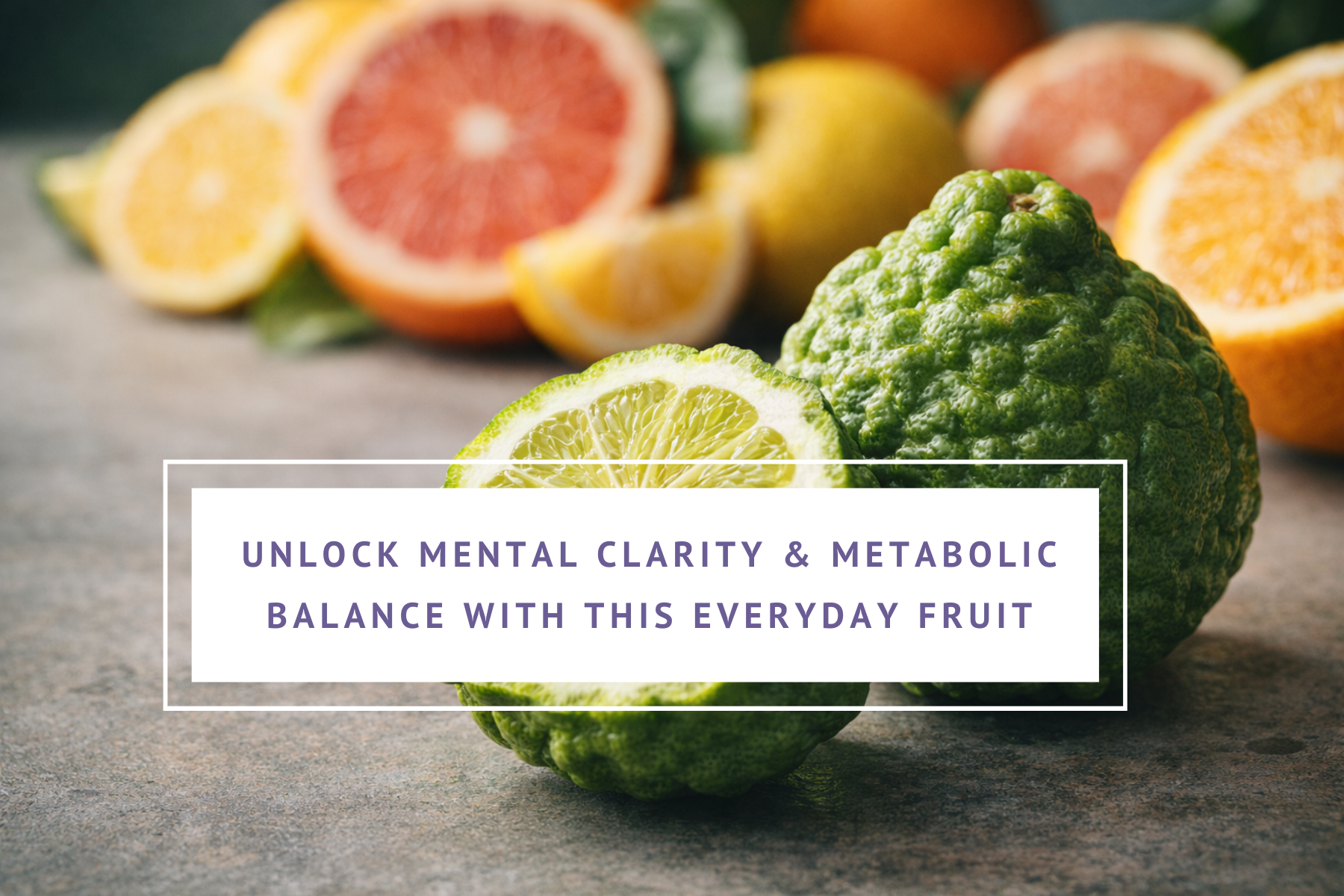
One citrus fruit quietly outshines the rest when it comes to polyphenols.
There's a reason you instinctively reach for something bright and citrusy when you feel sluggish.
Your body loves citrus.
Oranges. Lemons. Grapefruit. Tangerines.
They taste refreshing — but beneath that brightness is something far more powerful: citrus flavonoids, a class of plant polyphenols studied for their effects on brain clarity, circulation, and metabolic balance.
And while all citrus fruits contain these compounds…
There's one citrus in particular that contains an unusually high concentration of unique polyphenols — and that's where things get interesting.
Before we get there, let's build the foundation.
Part 1: What Citrus Fruits Do in General
Citrus fruits are rich in flavonoids — bioactive plant compounds concentrated especially in the peel and white pith (the soft, white, spongy layer between the outer rind "zest" and the juicy segments inside).
Common citrus flavonoids include:
- Naringin
- Hesperidin
- Diosmin
- Neoeriocitrin
- Brutieridin
Unlike caffeine or stimulants, citrus flavonoids don't push your nervous system into overdrive.
They support natural physiological signaling pathways that influence circulation, oxidative balance, and metabolic regulation.¹
Let's break that down.
How Citrus Supports Mental Clarity
1. Supports Healthy Blood Flow to the Brain
Cognitive performance depends on circulation.
Flavonoid intake has been shown to support endothelial function — the lining of your blood vessels — which influences cerebral blood flow.²
Better circulation means:
- Improved oxygen delivery
- More efficient nutrient transport
- Sharper mental processing
That "citrus clarity" feeling? It's not imaginary.
2. Supports Brain Antioxidant Defenses
The brain uses significant oxygen which makes it vulnerable to oxidative stress.
Citrus polyphenols help support endogenous antioxidant systems, including superoxide dismutase and glutathione pathways.³
This supports:
- Long-term cognitive resilience
- Reduced oxidative burden
- Healthier cellular signaling
3. Supports Mood & Neurotransmitter Balance
Emerging evidence suggests flavonoids may influence dopamine and serotonin pathways associated with mood and focus.³
The result may include:
- More stable mental energy
- Reduced "fog"
- Clearer thinking without jitteriness
So citrus in general supports circulation, antioxidant balance, and neurological signaling.
But that's just the baseline.
Part 2: The Citrus That Outshines the Others — Bergamot
Most citrus fruits provide common flavonoids.
Citrus bergamot (Citrus bergamia) contains those — plus a unique profile of rare polyphenols not found in typical oranges or lemons.
Bergamot contains:
- Neoeriocitrin
- Naringin
- Neohesperidin
- Brutieridin
- Melitidin
Brutieridin and melitidin are especially interesting — they have structural similarities to compounds studied for cholesterol regulation.
This is why bergamot has become the most researched citrus for metabolic health.
How Bergamot Specifically Supports Metabolic Balance
1. Supports Healthy Cholesterol Levels
Multiple human clinical trials on Bergamot Polyphenolic Fraction (BPF) show support for cholesterol levels already within normal range.⁴, ⁵
Improvements have been observed in:
- LDL cholesterol
- HDL cholesterol
- Triglycerides
This effect appears stronger with bergamot than with standard citrus intake.
2. Supports Healthy Blood Sugar & Insulin Sensitivity
Human studies using citrus flavonoid blends (including bergamot compounds) have demonstrated:
- Support for healthy fasting glucose
- Improved insulin sensitivity
- Reduced inflammatory markers⁶
Steadier glucose = steadier mental energy.
And that's where the brain–metabolism connection tightens.
3. Supports Natural GLP-1 Signaling
GLP-1 (glucagon-like peptide-1) is a gut hormone involved in satiety and metabolic regulation.
A 2025 human clinical study found that citrus flavonoids increased GLP-1 levels while improving metabolic markers.⁶
Important distinction:
Citrus flavonoids support your body's own signaling pathways. They are not pharmaceutical GLP-1 drugs.
But they may help your natural metabolic messaging work more efficiently.
The Gut–Brain Connection: Why This Matters
Citrus flavonoids are metabolized by gut bacteria into active compounds.
These influence:
- Short-chain fatty acid production
- Gut barrier integrity
- Inflammatory signaling⁷
Because the gut communicates directly with the brain (via hormones, immune signals, and the vagus nerve), supporting gut balance supports:
- Focus
- Mood
- Appetite regulation
- Metabolic stability
This is why citrus works systemically — not just locally.
How to Add Citrus Flavonoids to Your Routine
1. Eat Whole Citrus
- Oranges
- Grapefruit
- Lemons (include zest when possible)
- Tangerines
Tip: Don't peel too aggressively.
Just beneath the colorful outer peel (the orange or yellow skin) is a soft, white, spongy layer called the pith.
The pith is the slightly bitter, cottony layer that clings to the fruit after you remove the peel.
Most people scrape it off.
But that white layer is actually rich in citrus flavonoids — especially compounds like hesperidin and naringin.
So when you eat an orange:
- The juicy segments give you vitamin C.
- The white pith gives you a significant portion of the polyphenols.
In other words, the part you usually discard contains some of the most metabolically interesting compounds.
2. Use Standardized Bergamot Extract (For Clinical-Level Support)
Most research uses:
- Italian-sourced Citrus bergamia
- Standardized Bergamot Polyphenolic Fraction (BPF)
- 500–1,000 mg daily
Quality markers to look for:
- Calabria, Italy origin
- Polyphenol standardization
- Third-party testing
Not all citrus powders equal research-grade bergamot extracts.
3. Pair Strategically
Not all citrus works the same — and what you pair it with matters.
For most citrus fruits (like oranges, lemons, grapefruit):
Pair with protein.
Protein helps stabilize blood sugar, slowing the absorption of natural fruit sugars and supporting steady energy.
Examples:
- Greek yogurt + orange slices + chia seeds
- Protein smoothie + lemon zest + berries
- Cottage cheese + grapefruit
For Citrus Bergamot:
Pair with fiber.
Bergamot's polyphenols work best alongside fiber, which supports the microbiome and helps optimize metabolic and GLP-1 signaling.
Examples:
- Bergamot supplement + high-fiber breakfast (oats, flax, berries)
- Bergamot supplement + chia pudding
- Bergamot supplement + a fiber-rich smoothie (leafy greens, flaxseed, psyllium)
The rule is simple:
Citrus → protein.
Bergamot supplement → fiber.
The Bottom Line
All citrus supports circulation, antioxidant defense, and cognitive clarity.
But citrus bergamot stands apart for its unique polyphenol profile and clinically studied effects on cholesterol, blood sugar, and GLP-1 signaling.
If you're looking for:
- Sharper focus
- Steadier energy
- Metabolic balance without stimulants
There's one citrus that quietly outperforms the rest.
And now you know which one.
References
- González-Molina E, et al. Bioavailability and metabolism of citrus flavonoids. J Agric Food Chem. 2010;58(12):651–659. PMID: 20429551.
- Spencer JPE, et al. Flavonoids and brain health: endothelial and cerebral blood flow mechanisms. Proc Nutr Soc. 2012;71(2):246–253. PMID: 22333535.
- Vauzour D, et al. The neuroprotective potential of flavonoids: mechanisms and clinical relevance. Br J Nutr. 2008;99 E Suppl 1:S5–S17. PMID: 18234119.
- Mollace V, et al. Hypolipemic and hypoglycemic activity of bergamot polyphenols: From animal models to human studies. Front Pharmacol. 2019;10:437. PMID: 31001144.
- Gliozzi M, et al. Bergamot polyphenolic fraction improves metabolic and lipid profile in subjects with hyperlipidemia. Phytother Res. 2013;27(8):1195–1202. PMID: 23212792.
- Cesar T, et al. Citrus flavonoid supplement enhances glycemic and metabolic control in prediabetic patients on metformin: a randomized controlled trial. Front Nutr. 2025 Aug 19;12:1639901. doi: 10.3389/fnut.2025.1639901. PMID: 40904779; PMCID: PMC12401686.
- Selma MV, Espín JC, Tomás-Barberán FA. Interaction between phenolics and gut microbiota. J Agric Food Chem. 2009;57(15):6485–6501. PMID: 19545132.
*These statements have not been evaluated by the Food and Drug Administration. This product is not intended to "diagnose, treat, cure, or prevent any disease." Always consult your healthcare provider before starting any new supplement.


