

It usually starts the same way.
You sit down to work… and your brain just won't lock in.
You reread the same sentence three times.
Your focus drifts.
Another cup of coffee helps — for a little while — but then the crash comes.
More people are realizing that pushing the brain harder isn't always the solution.
Instead, they are looking for ways to support the brain itself.
That is one reason Lion's Mane mushroom has grown rapidly in popularity.
This unusual, shaggy-looking mushroom has been used for centuries as both a food and traditional herbal ingredient. Modern research is now exploring the compounds inside Lion's Mane and how they may help support brain health and cognitive function as part of a healthy lifestyle [1,2].
In this article we will explore:
- What Lion's Mane mushroom is
- How it has been used traditionally
- Why interest in Lion's Mane is growing
- How it may support brain health
- 10 potential benefits of Lion's Mane mushroom
- Fruiting body vs. mycelium supplements
- How to choose a high-quality Lion's Mane supplement
- Dosage and how long it may take to notice effects
What Is Lion's Mane Mushroom?
Lion's Mane (Hericium erinaceus) is one of the most unusual mushrooms found in nature.
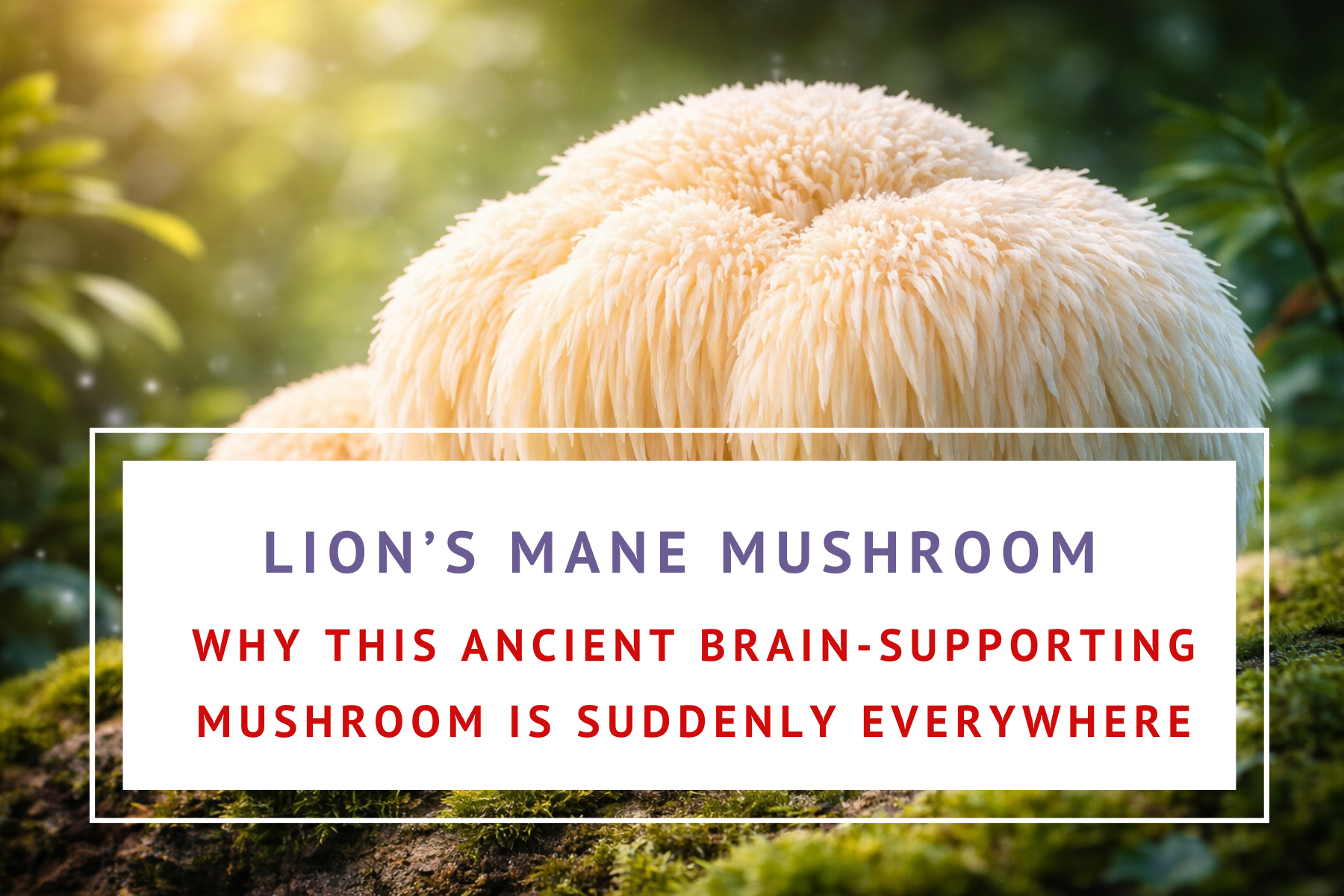
Instead of a traditional cap and stem, it grows as a round cluster of soft white tendrils that cascade downward, resembling a lion's mane.
It naturally grows on hardwood trees across:
- North America
- Europe
- East Asia [3]
Despite its unusual appearance, Lion's Mane has long been valued as both:
- a culinary mushroom
- a functional food with traditional uses [1]
In cooking, it is known for a mild flavor and texture often compared to seafood.
In traditional herbal systems, Lion's Mane was valued for another reason: supporting the mind and overall vitality.
Lion's Mane in Traditional Herbal Medicine
Lion's Mane has been used for centuries in Traditional Chinese Medicine and other Asian herbal traditions.
Historically, it was consumed to support:
- mental clarity
- digestive health
- vitality
- nervous system balance [1]
Ancient herbal texts sometimes described Lion's Mane as a mushroom that could help "nourish the brain."
Today, scientists are investigating the compounds inside Lion's Mane that may help explain its long-standing reputation.
Why Lion's Mane Mushroom Is Gaining Attention
Lion's Mane has existed for centuries.
So why is it suddenly appearing in:
- brain supplements
- mushroom coffees
- productivity stacks
- wellness routines
Part of the answer lies in how people now think about brain health.
For years, productivity culture encouraged people to rely on stimulants like caffeine to fight fatigue and brain fog.
But stimulants only push the brain harder. They do not support the underlying systems that help maintain healthy brain function.
Because of this, many people are now exploring natural ingredients that may help support:
- focus
- memory
- mental clarity
- long-term cognitive resilience
Lion's Mane fits into this shift because its compounds are being studied for their interaction with nerve growth factor (NGF) and other neurological pathways [2].
The Growing Interest in Functional Mushrooms
Lion's Mane belongs to a group known as functional mushrooms.
These mushrooms contain naturally occurring compounds that interact with biological systems in the body.
Examples include:
- Lion's Mane
- Reishi
- Cordyceps
- Chaga
Functional mushrooms contain compounds such as:
- beta-glucans
- polysaccharides
- antioxidant molecules
These compounds are being studied for their potential roles in immune balance and overall health [4].
How Lion's Mane May Support Brain Health
Lion's Mane contains several compounds scientists are studying for their effects on the nervous system.
Two groups of compounds are especially important:
- Hericenones
- Erinacines
Research suggests these compounds may influence nerve growth factor (NGF), a protein involved in the growth and maintenance of neurons [2].
NGF plays an important role in:
- growth of nerve cells
- communication between neurons
- learning and memory
- brain plasticity
Healthy NGF signaling helps maintain the neural connections required for cognitive function.
Unlike caffeine or other stimulants, Lion's Mane appears to work by supporting long-term neurological pathways rather than temporarily stimulating the brain.
10 Potential Benefits of Lion's Mane Mushroom
Researchers are studying Lion's Mane for a range of biological activities related to the nervous system, immune function, and antioxidant protection.
Below are several ways Lion's Mane may support overall wellness.
1. Supports Nerve Growth Factor Activity
Compounds in Lion's Mane are being studied for their ability to stimulate nerve growth factor, which helps maintain healthy neurons [2].
2. Supports Neural Communication
Healthy cognitive function depends on efficient communication between brain cells. Lion's Mane compounds are being studied for their role in neuronal signaling pathways.
3. Supports Memory and Learning
Neural plasticity plays an important role in learning and memory. By supporting NGF pathways, Lion's Mane may help maintain cognitive processes involved in learning.
4. Helps Maintain Mental Clarity
Many people use Lion's Mane as part of a routine aimed at supporting everyday cognitive clarity and productivity.
5. Supports Focus and Cognitive Performance
Lion's Mane is frequently included in nootropic formulations designed to support sustained mental performance without relying on stimulants.
6. Provides Antioxidant Support
Lion's Mane contains antioxidant compounds that help protect cells from oxidative stress [1].
7. Supports Nervous System Health
Bioactive compounds in Lion's Mane are being studied for their ability to support nerve cell structure and function.
8. Supports Digestive Wellness
Lion's Mane has traditionally been used to support digestive health and overall gut function.
9. Supports Immune System Balance
Lion's Mane contains beta-glucans, compounds known to interact with immune cells and support balanced immune responses [4].
10. Supports Long-Term Cognitive Wellness
Because Lion's Mane works through neurological pathways rather than short-term stimulation, it is often used as part of a long-term cognitive wellness routine.
Fruiting Body vs Mycelium: Why It Matters
One confusing aspect of Lion's Mane supplements is the difference between fruiting body and mycelium.
Understanding this difference can help when choosing a supplement.
Fruiting Body
The fruiting body is the visible mushroom that grows above ground.
Many studies investigating Lion's Mane compounds analyze extracts derived from the fruiting body.
Mycelium
Mycelium is the underground network from which mushrooms grow.
Some supplements contain mycelium grown on grain. In some cases this may include starch from the growth medium rather than concentrated mushroom compounds.
Because of this, many high-quality supplements focus on fruiting body extracts.
How to Choose a High-Quality Lion's Mane Supplement
Not all mushroom supplements are created equal.
Look for the following characteristics:
Fruiting Body Extract
Choose products made from fruiting body mushrooms rather than mycelium on grain.
Standardized Beta-Glucans
Look for products listing beta-glucan content, not just generic "polysaccharides."
Transparent Sourcing
Reputable brands provide information about:
- mushroom species (Hericium erinaceus)
- extraction methods
- growing conditions
Third-Party Testing
Quality supplements should be tested for:
- heavy metals
- microbial contamination
- purity and potency
Best Time to Take Lion's Mane
Lion's Mane does not contain caffeine and can generally be taken at any time of day.
Many people prefer taking it:
In the morning
to support mental clarity throughout the day.
With meals
to support digestion and absorption.
Some people divide their intake between morning and afternoon servings.
How Long Does Lion's Mane Take to Work?
Lion's Mane differs from stimulants that provide immediate effects.
Instead of temporarily increasing alertness, Lion's Mane appears to support biological processes involved in long-term brain health.
Because of this, benefits may develop gradually with consistent use.
Clinical studies examining cognitive outcomes have evaluated effects after 8–16 weeks of regular intake [5].
Key Takeaways
Lion's Mane mushroom is a functional mushroom traditionally used to support mental clarity and vitality.
It contains compounds such as hericenones and erinacines that are being studied for their effects on nerve growth factor.
Lion's Mane may help support brain health, immune balance, and antioxidant protection.
High-quality supplements typically use fruiting body extracts with standardized beta-glucan levels.
References
- Friedman M. Chemistry, nutrition, and health-promoting properties of Hericium erinaceus (Lion's Mane) mushroom. Journal of Agricultural and Food Chemistry. 2015.
https://pubmed.ncbi.nlm.nih.gov/26244378/ - Nagano M, et al. Reduction of depression and anxiety by 4 weeks Hericium erinaceus intake. Biomedical Research. 2010.
https://pubmed.ncbi.nlm.nih.gov/20834180/ - Wasser SP. Medicinal mushroom science: current perspectives, advances, evidences, and challenges. International Journal of Medicinal Mushrooms. 2014.
https://pubmed.ncbi.nlm.nih.gov/25179726/ - Vetvicka V, Vannucci L, Sima P. β-glucans as natural biological response modifiers. Journal of Immunotoxicology.
https://pubmed.ncbi.nlm.nih.gov/19275682/ - Mori K, et al. Improving effects of the mushroom Hericium erinaceus on mild cognitive impairment. Phytotherapy Research. 2009.
https://pubmed.ncbi.nlm.nih.gov/18844328/
Disclaimer
This content is for educational purposes only. These statements have not been evaluated by the Food and Drug Administration. This product is not intended to diagnose, treat, cure, or prevent any disease. Consult a qualified healthcare professional before starting any dietary supplement.


