

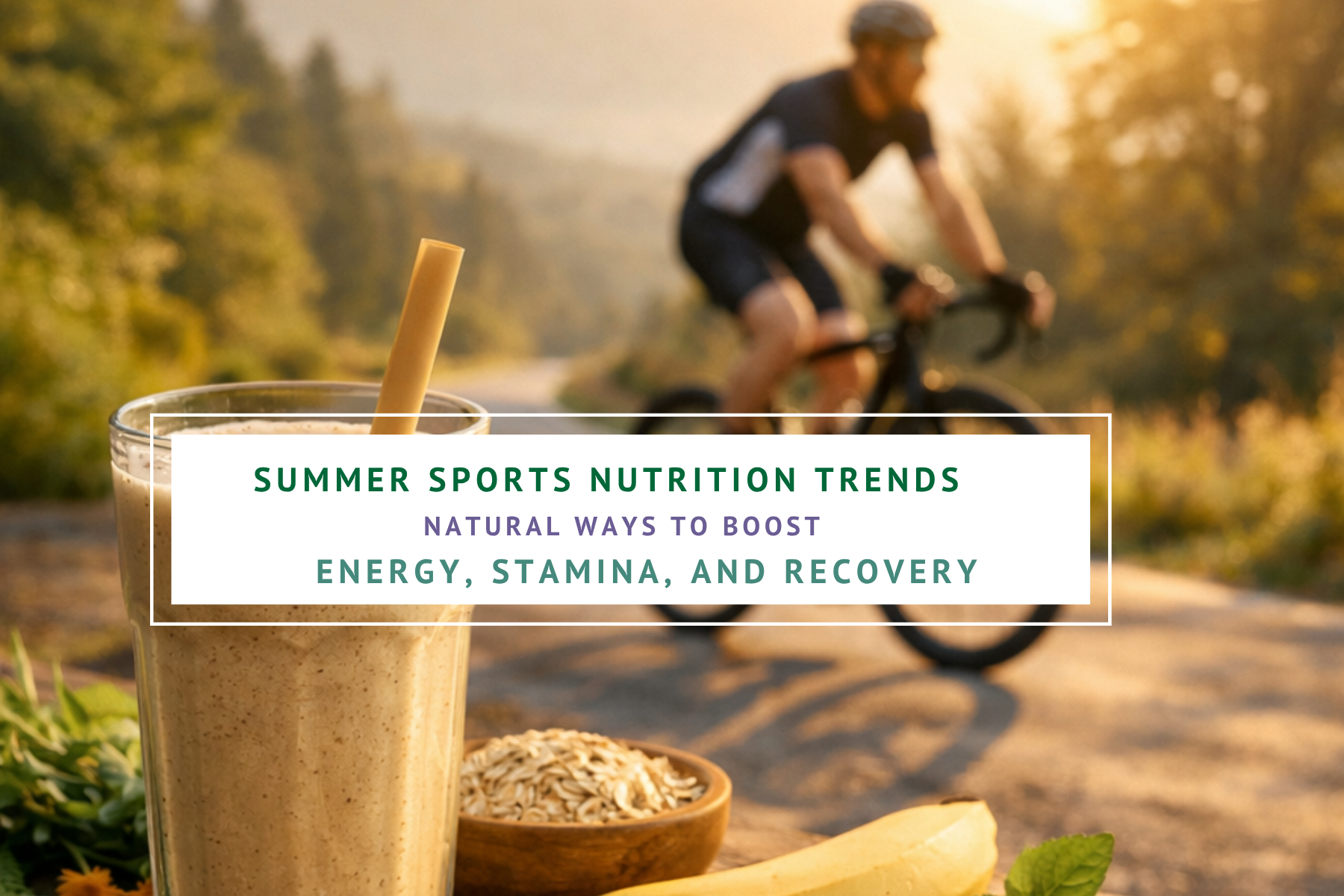
Why Summer Is the Season of Movement
The sun rises earlier in summer.
Before the city fully wakes, runners are already moving through quiet streets. Cyclists glide along open roads. Hikers lace up boots for early morning trails before the heat sets in.
Summer brings a shift in energy. Longer days invite people outside—to train harder, move more, and reconnect with their bodies.
From weekend warriors to dedicated athletes, many people naturally increase their physical activity during the warmer months.
But with more movement comes a new challenge: how to maintain energy, stamina, and recovery when activity levels rise.
This is why sports nutrition trends evolve every summer. Instead of relying only on stimulants or synthetic performance products, many athletes are exploring plant-based ingredients that support endurance, stress resilience, and recovery naturally.
One botanical that has gained attention in recent years is black maca—a nutrient-dense root traditionally used to support energy, stamina, and physical resilience.
The New Wave of Summer Sports Nutrition
Sports nutrition has changed dramatically in the last decade.
For years, the industry focused heavily on high caffeine pre-workouts, synthetic stimulants, and aggressive performance enhancers. While these can provide temporary boosts, they often lead to:
- energy crashes
- jitteriness
- disrupted sleep
- increased stress on the nervous system
Today, athletes and active individuals are increasingly looking for sustainable performance strategies.
Current sports nutrition trends emphasize:
- plant-based adaptogenic ingredients
- metabolic support rather than overstimulation
- recovery-focused nutrition
- whole-food derived compounds
This reflects a deeper understanding:
Energy isn’t something you force.
It’s something your body produces—when the systems behind it are supported.
What Is Black Maca?
Maca (Lepidium meyenii) is a root vegetable grown high in the Andes Mountains of Peru, often at elevations above 13,000 feet.
For centuries, Andean cultures have used maca as a nutritional staple and a traditional wellness food believed to support vitality, stamina, and reproductive health.
There are several varieties of maca distinguished by color:
- yellow maca
- red maca
- black maca
While all types contain beneficial compounds, black maca is often studied for its potential effects on physical performance, energy metabolism, and endurance.
Maca contains a range of natural bioactive compounds, including:
- macamides
- macaenes
- glucosinolates
- phenolic antioxidants
- plant sterols
These compounds are associated with maca’s ability to support:
- balanced stress responses
- physical endurance
- cellular antioxidant defenses
- energy metabolism pathways.¹
Unlike caffeine-based stimulants, maca does not force the nervous system into a heightened alert state. Instead, it appears to support the body’s natural ability to respond to physical and emotional stress.
Why Athletes Are Turning to Adaptogenic Plants
A growing number of athletes are exploring adaptogenic botanicals—plants traditionally used to support the body’s response to stress.
Adaptogens are believed to help the body maintain stability during physical, mental, or environmental challenges.
This is particularly relevant for athletes and active individuals because training itself is a form of stress.
When the body trains, it must balance several competing processes:
- energy production
- muscle recovery
- inflammation regulation
- hormonal signaling
- nervous system recovery
When these systems remain balanced, performance improves.
When they become overwhelmed, fatigue and burnout often follow.
Some researchers describe maca as adaptogen-like because studies suggest it helps support emotional well-being and stress resilience without overstimulating the body.¹,²
For athletes training through the intense heat and longer sessions of summer, this type of support may be particularly useful.
Black Maca and Energy Production
One reason black maca has gained interest in sports nutrition is its potential role in energy metabolism.
Energy production in the body primarily occurs in the mitochondria—structures inside cells responsible for generating ATP, the molecule that fuels muscular contraction.
Preclinical research suggests that maca extracts may influence pathways involved in:
- mitochondrial biogenesis
- antioxidant defense systems
- endurance capacity during physical stress.³
In a 2022 experimental study examining exercise-related stress, maca supplementation was associated with improved endurance performance and enhanced mitochondrial signaling.³
While more human research is needed, these findings help explain why maca has traditionally been used to support physical stamina.
Rather than stimulating the nervous system directly, maca may help optimize the cellular energy systems responsible for sustained energy production.
Black Maca and Physical Stamina
Summer sports often require sustained endurance.
Activities such as cycling, distance running, hiking, swimming, and outdoor training sessions place extended demands on the body’s energy systems.
Black maca has drawn particular interest in this area.
A 2023 clinical investigation examining black maca supplementation in athletes undergoing intense training reported improvements in markers related to physical performance and recovery.
Researchers observed support for:
- physical fitness indicators
- antioxidant activity
- normal inflammatory responses during intense training.⁴
These findings suggest that black maca may help support the body’s ability to adapt to heavy physical workloads.
For athletes who increase their training intensity during summer months, this type of support may be valuable for maintaining stamina across longer sessions.
Black Maca and Recovery After Exercise
Recovery is one of the most important—and often overlooked—components of sports performance.
When the body exercises intensely, several physiological processes occur simultaneously:
- muscle fibers experience micro-damage
- oxidative stress increases
- inflammatory signaling rises
- energy reserves are depleted
These responses are normal and necessary for adaptation.
However, excessive stress without adequate recovery can lead to fatigue, overtraining, and decreased performance.
Maca’s antioxidant compounds may play a role in helping the body manage this stress.
Research analyzing maca’s phytochemical composition shows strong antioxidant activity linked to its phenolic compounds and alkaloids.³
Antioxidants help protect cells from oxidative stress generated during intense exercise.
Supporting these pathways may contribute to improved recovery and resilience following demanding workouts.
Black Maca and the Stress Response
Another factor influencing athletic performance is the body’s stress-response system.
High training loads, heat exposure, travel, and competition can all activate the body’s stress pathways.
When stress hormones remain elevated for extended periods, athletes may experience:
- fatigue
- impaired recovery
- decreased motivation
- reduced performance
Maca has been studied for its ability to support emotional well-being and perceived stress levels.
Human clinical trials have shown maca may support mood balance and emotional well-being during everyday stress in several populations.¹,²
For athletes, psychological resilience can be just as important as physical strength.
Maintaining a balanced stress response helps support focus, motivation, and consistent training.
Practical Ways Active People Use Black Maca
For active individuals, black maca isn’t something they “take” occasionally—it becomes part of a rhythm.
A quiet layer of support woven into how they prepare, train, and recover.
Because performance isn’t built in a single workout.
It’s built in the moments around it.
The way you fuel before.
The way you replenish after.
The consistency in between.
Here’s how many active people naturally incorporate black maca into that cycle:
1. Before Training: Building Steady Energy (Not Spikes)
Instead of relying on high-stimulant pre-workouts that push the nervous system, many athletes prefer to support energy at the metabolic level—especially before longer or more demanding sessions.
This is where black maca fits in.
It’s often added to a whole-food pre-workout smoothie designed to provide:
- Slow-digesting carbohydrates for sustained fuel
- Micronutrients that support cellular energy production
- Adaptogenic compounds that help the body handle physical stress
One practical approach is combining black maca with complex, grounding carbohydrates like oats, which provide a steady glucose release without sharp crashes.
A simple and effective option is this pre-workout blend:
Pre-Workout Power Smoothie
Why this works
You’re not forcing energy—you’re supplying it.
This kind of pre-workout supports:
- Stable blood sugar during training
- Longer-lasting endurance
- Fewer mid-workout energy dips
2. After Training: Supporting Recovery and Rebuilding
Training creates stress in the body.
Adaptation happens in how you recover from it.
This is where many active individuals shift their focus—from output to restoration.
Instead of only thinking about protein, they look at recovery as a full-system process:
- Replenishing energy.
- Supporting repair.
- Helping the body return to balance.
Black maca naturally fits into this phase.
It’s often paired with nutrient-dense, post-workout meals or smoothies designed to support:
- Muscle repair
- Recovery from physical stress
- Restoration of depleted energy stores
One practical and well-balanced option is this recovery-focused smoothie:
Hormone Balancing Maca Energy Smoothie
This approach works because it combines multiple layers of support:
- Greek yogurt provides high-quality protein to support muscle repair
- Banana delivers healthy carbohydrates, minerals, and fiber to help replenish glycogen and support recovery
- Black maca adds adaptogen-like compounds that help the body recalibrate after exertion
For those with higher protein needs, adding a scoop of clean protein powder can further support recovery and muscle rebuilding.
Why this works
Recovery isn’t just about replacing what was lost.
It’s about creating the conditions for the body to rebuild stronger.
This kind of post-workout support helps:
- Replenish glycogen efficiently
- Support normal inflammatory balance
- Reduce oxidative stress from training
- Promote a smoother transition from stress → recovery → adaptation
Black maca plays a subtle but important role here—not by forcing recovery, but by supporting the body’s natural ability to reset and rebuild over time.
3. Daily Use: Consistency Over Intensity
The biggest shift active people make isn’t what they take—it’s how consistently they support their system.
Black maca is often used:
- Daily in smoothies
- Blended into oatmeal or yogurt
- Mixed into coffee or cacao drinks
Because its effects are not immediate or overstimulating.
They’re cumulative.
Over time, consistent use may help support:
- Steadier energy levels
- Improved resilience to physical stress
- Better recovery between sessions
The Bigger Picture: Performance Comes From Balance
It’s easy to think of athletic performance as simply pushing harder.
But real progress comes from balance.
The body performs best when several systems work together:
- energy production
- stress regulation
- recovery pathways
- immune signaling
- mental resilience
Nutrition plays an essential role in supporting these systems.
Plants like black maca are gaining attention not because they force performance—but because they support the biological foundations of endurance and resilience.
The Bottom Line
Summer inspires movement.
Longer days and warm weather naturally encourage people to run farther, train harder, and explore the outdoors.
But increased activity also requires stronger support for energy, stamina, and recovery.
Black maca, a traditional Andean root rich in unique plant compounds, is gaining interest among athletes and active individuals for its potential role in supporting physical resilience and endurance.
Emerging research suggests black maca may help support energy metabolism, antioxidant defenses, and the body’s response to training stress.³,⁴
As sports nutrition continues to evolve, many athletes are shifting toward plant-based ingredients that support performance without overstimulation.
For those seeking sustainable energy and recovery during an active summer season, black maca represents one promising option within a broader strategy of balanced training, nutrition, and rest.
References
- Brooks NA, Wilcox G, Walker KZ, Ashton JF, Cox MB, Stojanovska L. Beneficial effects of Lepidium meyenii (maca) on psychological symptoms and measures of sexual dysfunction in postmenopausal women. Menopause. 2008. https://pubmed.ncbi.nlm.nih.gov/18784609/
- Meissner HO, Reich-Bilinska H, Mscisz A, Kedzia B. Therapeutic effects of pre-gelatinized maca used as a non-hormonal alternative during perimenopause. International Journal of Biomedical Science. 2006. https://pubmed.ncbi.nlm.nih.gov/23674976/
- Orhan C, et al. Maca extract improves endurance capacity and mitochondrial signaling in exercise-related stress models. Nutrients. 2022. https://pubmed.ncbi.nlm.nih.gov/35347728/
- Clinical study evaluating black maca supplementation and markers of athletic performance and recovery. Journal of Sports Nutrition Research. 2023. https://pmc.ncbi.nlm.nih.gov/articles/PMC10097151/
FDA Disclaimer
*These statements have not been evaluated by the Food and Drug Administration. This content is not intended to “diagnose, treat, cure, or prevent any disease.”
Health Practitioner Disclaimer
*This content is for educational purposes only and should not replace professional medical advice. Always consult your healthcare provider regarding changes to your health routine.


