

There's a quiet pattern you start to notice.
Some people seem to stay healthy no matter the season. But have you noticed? They don't overhaul their routine every time they feel run down. They don't chase every new "immune boost" trend. They just… stay consistent.
Meanwhile, other people are stuck in cycles: Try something → feel hopeful → fall off → start again. Not because they lack discipline. But because the system they're following isn't built for real life.
The immune system doesn't reward intensity. It rewards repetition. And that's exactly why functional mushrooms are being rediscovered—not as a remedy, but as a rhythm. A way to support your body daily, without needing to start over every time.
Why Functional Mushrooms Are Becoming a Foundation for Immune Support
Functional mushrooms are not new. For centuries, cultures across Asia, Europe, and Indigenous traditions used mushrooms as part of daily nourishment. They were brewed into teas, simmered into broths, and incorporated into regular meals—not as medicine in moments of crisis, but as steady support for resilience.
Modern research is now validating many of these traditional uses. Scientists have identified key compounds in functional mushrooms that interact with multiple biological systems, including:
- Immune cell signaling
- Gut microbiome composition
- Inflammatory pathways
- Antioxidant defense systems
These compounds—particularly beta-glucans and polysaccharides—help support immune balance rather than overstimulation [1–3].
That distinction is critical. A healthy immune system is not one that is constantly "activated." It is one that can respond appropriately when needed, and remain calm when not. Functional mushrooms support this balance.
What Makes Functional Mushrooms Unique
Functional mushrooms differ from conventional immune supplements in one important way: They do not force the body into a heightened state. Instead, they support the systems that regulate immunity over time.
Beta-Glucans: The Core Immune-Modulating Compounds
Beta-glucans are naturally occurring fibers found in the cell walls of mushrooms. They interact with receptors on immune cells such as:
- Macrophages
- Dendritic cells
- Natural killer (NK) cells
This interaction helps support immune communication and readiness without triggering excessive activation [4,7]. Researchers often describe beta-glucans as "immune training" compounds because they help the immune system respond more effectively over time.
Polysaccharides and the Gut–Immune Connection
A significant portion of immune activity is linked to the gut. Mushroom polysaccharides act as prebiotic fibers, feeding beneficial gut bacteria and supporting microbial diversity [1,8]. This is important because the gut microbiome plays a central role in:
- Immune regulation
- Inflammatory balance
- Metabolic signaling
Supporting gut health is one of the most effective ways to support immune resilience.
Antioxidants and Cellular Protection
Immune cells are constantly exposed to oxidative stress during normal function. Functional mushrooms contain antioxidants that help neutralize free radicals and protect immune cells from damage [5]. This contributes to long-term immune efficiency and resilience.
The Real Problem with Most Immune Routines
Most people approach immune health reactively. They think about it when:
- They feel run down
- Seasonal changes occur
- Stress levels spike
This leads to inconsistent behavior. Short-term effort cannot produce long-term results. The immune system adapts based on patterns, not isolated actions.
That is why the most important question is not: "What should I take?" But rather: "What can I do every day without relying on motivation?"
Functional mushrooms are effective because they integrate easily into daily routines.
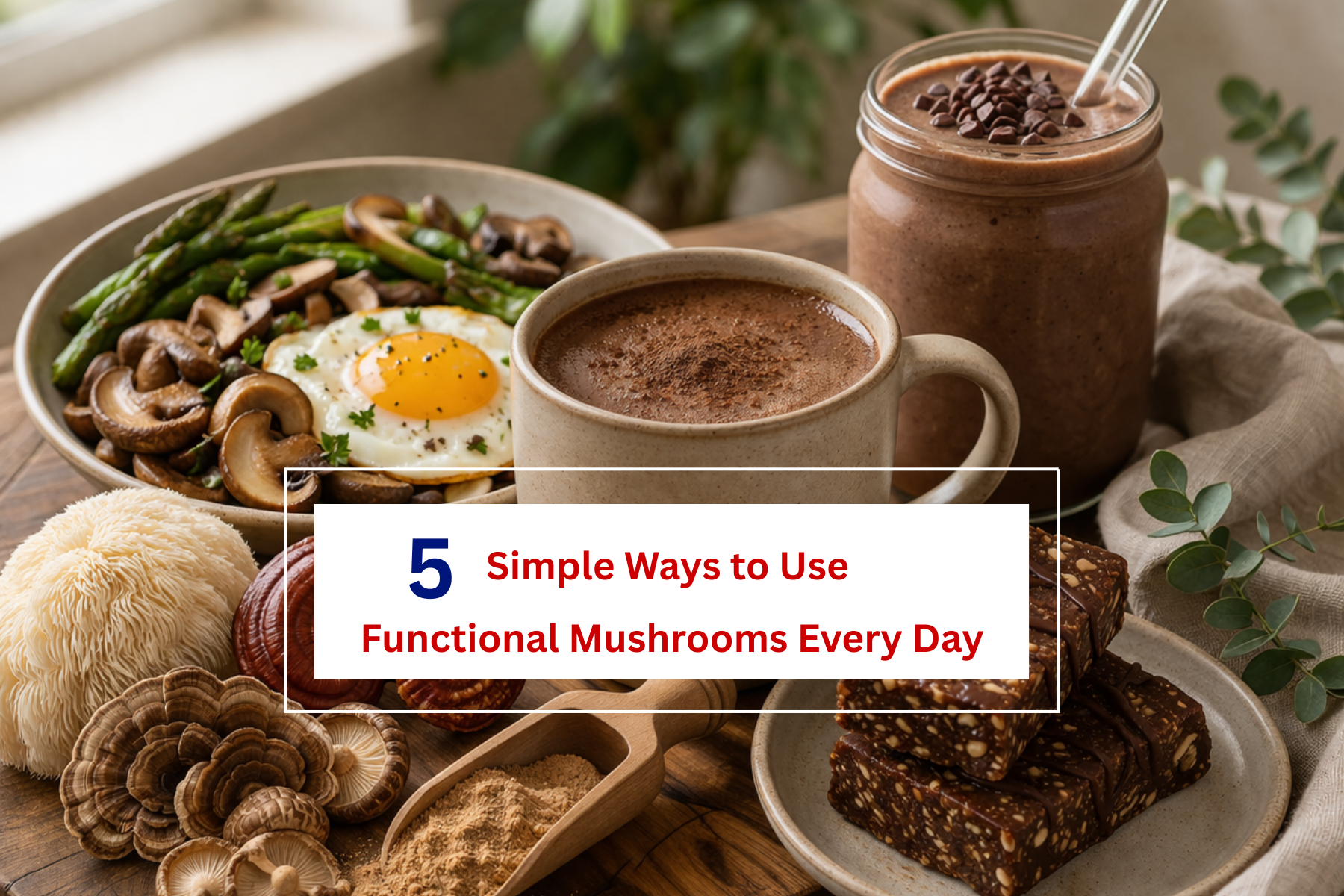
5 Simple Ways to Use Functional Mushrooms Every Day
The key to making functional mushrooms work is not complexity. It is integration. Not five different powders. Not a cabinet full of options. Just one high-quality, full-spectrum mushroom blend—used consistently, in ways that fit naturally into your day.
That's where a comprehensive formula like an Organic Mushroom Powder Extract blend becomes powerful: Instead of choosing between Lion's Mane, Reishi, or Turkey Tail… You're supporting multiple pathways at once—without adding complexity.
1. Anchor Immune Support to Your Morning Routine
Mornings are one of the few parts of the day that are predictable. And that's exactly why they matter. Because most health routines don't fail due to lack of intention—they fail because they don't fit into something consistent.
A mushroom blend works here because it integrates into what you're already doing, while supporting multiple systems at once: focus, gut health, and immune signaling. Instead of adding something new… you upgrade what already exists.
Simple implementation:
Mushroom Mocha Latte (Morning Upgrade)
For a ready-made version, see: Mushroom Coffee recipe
Smooth, slightly earthy, and deeply grounding.
2. Use Culinary Mushrooms + Your Blend for Daily Nutrition
Most people think immune support comes from what you add. But often, it's about what you layer into what you're already eating. Meals are consistent. They happen every day. Which makes them one of the most overlooked opportunities for building long-term resilience.
Whole mushrooms provide nutritional depth—fiber, beta-glucans, and micronutrients. Your mushroom blend provides concentration and consistency. Together, they create a system that supports your body without requiring extra effort.
A simple way to include them in your meals:
Get the full Asparagus with Mushroom and Egg recipe here
This becomes your food-first layer—with your blend adding consistency on top.
3. Turn Your Mushroom Routine Into Something You'll Actually Crave
Midday is where most routines fall apart. Energy dips. Focus drops. Consistency disappears. So instead of adding another "thing" to remember—build your mushroom routine into something you already enjoy.
Your mushroom blend pairs naturally with rich flavors like chocolate and coffee, making it easy to turn into a daily habit you'll actually look forward to.
One of the simplest ways to do this:
→ Make a batch of Mocha Stress-Free Bars and keep them on hand.
They're:
- Easy to prep
- Portioned for consistency
- Built to deliver your daily mushroom blend without thinking about it
Get the full Mocha Stress-Free Bars recipe here
One batch = multiple days of consistent use. No effort. No reminders. Just a habit that sticks.
4. Support Recovery with Your Blend in the Evening
Evening is where recovery begins. But for many people, this is also when the nervous system is still active—carrying stress from the day into the night. And when that happens, recovery becomes incomplete. Sleep may happen. But restoration doesn't fully follow.
This is where a simple evening ritual can shift the signal. Your mushroom blend supports:
- Recovery
- Immune modulation
- Stress-response balance
Not by forcing the body to slow down, but by creating the conditions for it.
For a richer, calming version, see:
Get the full Mushroom Hot Chocolate recipe here
5. Prioritize Consistency Over Intensity (One Blend, Multiple Touchpoints)
This is the most important step. You don't need:
- 5 different supplements
- Perfect timing
- Complicated protocols
You need repeatable exposure. The mushroom blend simplifies this:
- One product
- Multiple entry points
- Consistent daily use
No overwhelm. No decision fatigue. Just rhythm.
Why This Approach Works
Most immune-support strategies fail because they rely on motivation, complexity, and urgency. This approach works because it relies on habit integration, simplicity, and repetition. It aligns with how the body actually functions. Biological systems respond to consistent inputs over time.
The Role of the Gut–Immune Axis
One of the most important developments in modern health science is the understanding of the gut–immune connection. The gut microbiome influences:
- Immune signaling
- Inflammatory responses
- Nutrient metabolism
Functional mushrooms support this system through prebiotic polysaccharides. By feeding beneficial bacteria, they help maintain a balanced internal environment that supports immune function. This indirect pathway is one of the reasons functional mushrooms are considered foundational rather than supplemental.
Functional Mushrooms and Long-Term Resilience
The goal of immune support is not short-term defense. It is long-term resilience. Resilience means:
- Responding effectively to stress
- Maintaining balance under pressure
- Recovering efficiently
Functional mushrooms contribute to this by supporting:
- Immune communication
- Antioxidant protection
- Gut microbiome health
- Stress-response regulation
These are the systems that determine how well the body adapts over time.
Integrating Functional Mushrooms into a Complete Lifestyle
Functional mushrooms are most effective when combined with foundational health habits. These include:
- Consistent sleep
- Balanced nutrition
- Regular physical activity
- Stress management
- Social connection
No single intervention replaces these factors. However, functional mushrooms can enhance and support them.
Final Thoughts
There is a reason functional mushrooms have remained relevant across centuries. Not because they provide dramatic, immediate effects. But because they support the body in a steady, reliable way.
In a world focused on quick results, this approach is often overlooked. Yet it is the one that works. The most effective immune systems are not built through intensity. They are built through consistent, daily support. Functional mushrooms offer a simple way to do exactly that.
References
- Zhao J, et al. Interaction between mushroom polysaccharides and gut microbiota. Foods. 2023. https://pubmed.ncbi.nlm.nih.gov/36671814/
- Wasser SP. Medicinal mushrooms as a source of immunomodulating polysaccharides. Appl Microbiol Biotechnol. 2002. https://pubmed.ncbi.nlm.nih.gov/12436306/
- Valverde ME, et al. Edible mushrooms and human health. Int J Microbiol. 2015. https://pubmed.ncbi.nlm.nih.gov/25685150/
- Vetvicka V, Vetvickova J. Beta-glucans and immune modulation. J Immunotoxicol. 2014.
- Ferreira ICFR, et al. Antioxidant properties of mushrooms. Food Chem. 2009. https://pubmed.ncbi.nlm.nih.gov/19355906/
- Boh B, et al. Ganoderma lucidum pharmacological effects. Biotechnol Annu Rev. 2007. https://pubmed.ncmed.ncbi.nlm.nih.gov/17875480/
- Brown GD, Gordon S. Fungal beta-glucans and immune receptors. Nat Rev Immunol. 2003. https://pubmed.ncbi.nlm.nih.gov/14499107/
- Cryan JF, Dinan TG. Gut microbiota and brain function. Nat Rev Neurosci. 2012. https://pubmed.ncbi.nlm.nih.gov/22968153/
- Mori K, et al. Effects of Hericium erinaceus on cognitive function. Phytother Res. 2009.
- Zhao L, et al. Ganoderma lucidum immune modulation mechanisms. https://pmc.ncbi.nlm.nih.gov/articles/PMC12563824/
- Kidd PM. Mushroom glucans in immune support. Altern Med Rev. 2000. https://pubmed.ncbi.nlm.nih.gov/10696116/
- Dai X, et al. Shiitake mushroom consumption and immune function. J Am Coll Nutr. 2015. https://pubmed.ncbi.nlm.nih.gov/25866155/
- Nanba H. Maitake mushroom immune responses. Altern Med Rev. 1997. https://altmedrev.com/wp-content/uploads/2019/02/v6-1-48.pdf
*These statements have not been evaluated by the Food and Drug Administration. This information is for educational purposes only and is not intended to diagnose, treat, cure, or prevent any disease.


