

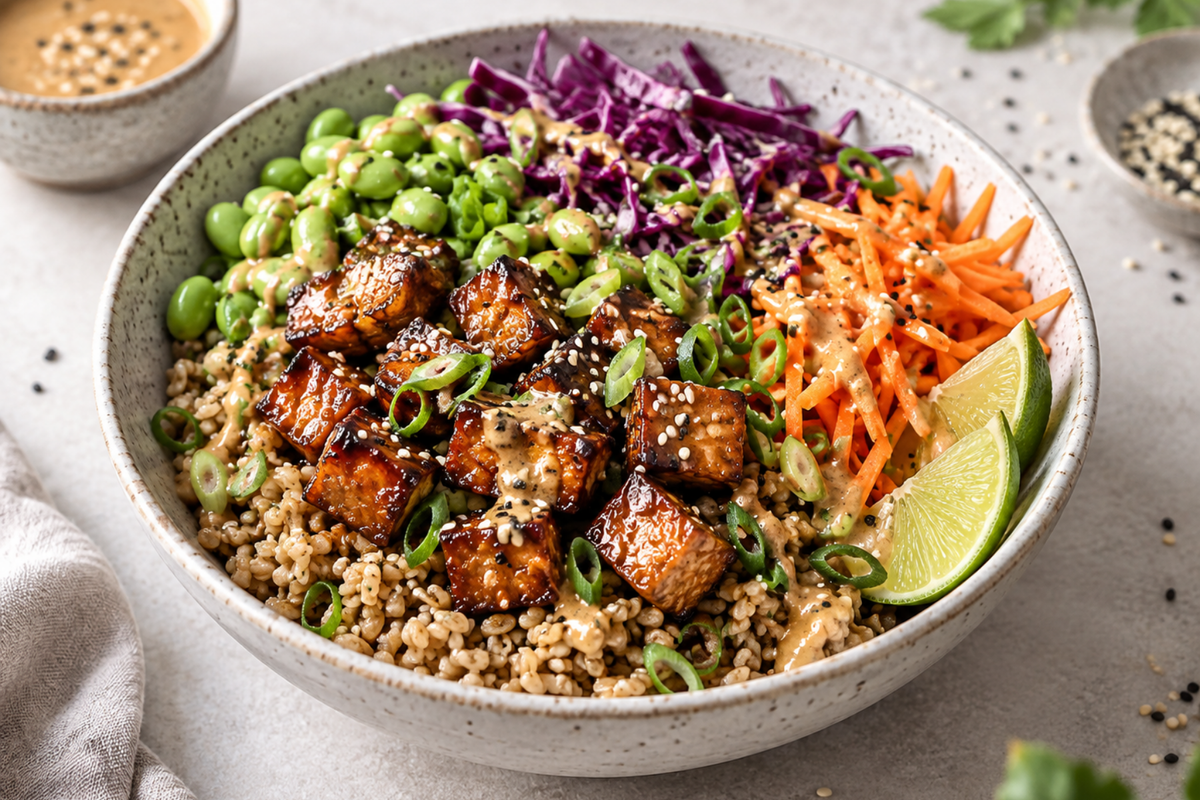
Say hello to the savory, umami-rich bowl your weeknights have been missing. This High-Protein Miso-Ginger Tempeh & Edamame Bowl layers marinated tempeh and buttery edamame over nutty freekeh, all brought together with a bright miso-ginger-lime dressing. It delivers 30 grams of plant protein and nearly 14 grams of fiber per serving for under 600 calories—built to help you feel satisfied and fueled through a full day. Naturally vegan, boldly flavored, and ready for the week ahead.
Table of Contents
- Why You'll Love This Recipe
- Ingredients You'll Need
- Ingredient Spotlights
- Step-by-Step Instructions
- Nutrition at a Glance
- Health Benefits
- Variations & Tips
- FAQ
- References
- Call to Action
Why You'll Love This Recipe
- Serious plant protein: Tempeh plus edamame stack up to 30 grams of protein per serving—supportive of muscle maintenance as part of a balanced diet, which matters more with each decade.
- Genuinely high fiber: Freekeh, edamame, and sesame bring nearly 14 grams of fiber per bowl to support digestive regularity and lasting fullness.
- Under 600 calories: A hearty, satisfying meal that still leaves room in your day.
- Big, fresh flavor: A savory miso-ginger-lime dressing is a bright departure from the usual lemon-tahini routine.
- Meal-prep friendly: Batch the components and assemble craveable bowls all week.
- Naturally vegan and dairy-free: With an easy gluten-free swap.
Ingredients You'll Need
Serves 4
For the bowl
- 1 cup dry freekeh (cracked; about 180 g), or sorghum or brown rice for gluten-free
- 8 oz tempeh, cut into 1/2-inch cubes
- 2 cups shelled edamame, thawed if frozen
- 1 tablespoon avocado oil, or another neutral oil, for the tempeh
- 2 cups thinly sliced red cabbage
- 2 medium carrots, cut into matchsticks or grated
- 4 scallions, thinly sliced
- 2 tablespoons sesame seeds, toasted
- Lime wedges, for serving
Miso-Ginger Dressing
- 2 tablespoons white (shiro) miso
- 1 tablespoon toasted sesame oil
- 1 tablespoon reduced-sodium tamari, using certified gluten-free tamari if needed
- 1 tablespoon maple syrup
- 2 tablespoons rice vinegar
- 2 tablespoons fresh lime juice
- 1 tablespoon freshly grated ginger
- 2 garlic cloves, grated
- 2–3 tablespoons warm water, to thin
Ingredient Spotlights
Tempeh: A fermented whole-soybean cake that delivers complete plant protein and soy isoflavones. Its firm, nutty texture soaks up marinade beautifully and crisps in the pan.
Edamame: Young green soybeans that add protein, fiber, and a buttery pop—an easy way to boost both macros without extra cooking.
Freekeh: Fire-roasted young green wheat with a smoky, nutty flavor and impressive fiber content, offering a fresh alternative to the usual quinoa or rice base.
Miso: A fermented soybean paste that brings deep umami and a touch of savory complexity, letting you build big flavor with less added salt.
Step-by-Step Instructions
- Cook the freekeh: Rinse 1 cup freekeh. Add to a pot with 2 1/2 cups water and a pinch of salt. Bring to a boil, reduce to a simmer, cover, and cook 20–25 minutes (cracked freekeh) until tender with a little chew. Drain any excess and let steam-dry. For gluten-free, cook sorghum or brown rice according to package directions.
- Make the dressing: In a jar, whisk miso, sesame oil, tamari, maple syrup, rice vinegar, lime juice, ginger, and garlic until smooth. Thin with warm water to a pourable consistency. Reserve about one-third for drizzling; use the rest to marinate the tempeh.
- Marinate and sear the tempeh: Toss tempeh cubes with two-thirds of the dressing and let sit 10 minutes. Heat avocado oil in a large skillet over medium-high. Add tempeh and cook 6–8 minutes, turning, until golden and caramelized at the edges.
- Warm the edamame: Add shelled edamame to the skillet in the last 2 minutes to heat through and pick up flavor.
- Assemble: Divide freekeh among 4 bowls. Top with tempeh and edamame, red cabbage, carrots, and scallions.
- Finish and serve: Drizzle with the reserved dressing, sprinkle with toasted sesame seeds, and serve with lime wedges. Enjoy warm or at room temperature.
Meal prep: Store components separately in airtight containers for up to 4 days; dress just before serving.
Nutrition at a Glance
Approximate values per serving (recipe serves 4):
- Calories: ~525
- Protein: ~30 g
- Fiber: ~14 g
Values are estimates and will vary with brands and exact quantities.
Health Benefits
Plant protein for a strong, active midlife: Combining tempeh and edamame provides roughly 30 grams of complete plant protein per bowl. Adequate protein intake, spread across meals, supports the maintenance of muscle mass as part of a balanced diet—an area many adults pay closer attention to from their mid-30s onward.
Fiber for fullness and regularity: With nearly 14 grams of fiber from freekeh, edamame, and sesame, this bowl supports digestive regularity and helps you feel satisfied between meals.
Soy foods, thoughtfully included: Tempeh, edamame, and miso are minimally processed soy foods that naturally contain isoflavones and contribute plant protein within a varied, plant-forward eating pattern.
Variations & Tips
- Gluten-free: Swap freekeh for sorghum, brown rice, or quinoa, and use certified gluten-free tamari.
- Lower sodium: Reduce the tamari and lean on the miso and lime for flavor.
- Add crunch or heat: Top with toasted cashews, a sprinkle of chili crisp, or a pinch of gochugaru.
- More veggies: Fold in shredded snap peas, cucumber ribbons, or quick-steamed green beans.
- Soy-free option: Use a chickpea-based or pea-protein tempeh alternative and swap edamame for green peas; replace miso with a splash of coconut aminos. Note that this changes the protein total.
- Serve it cold: This bowl travels beautifully as a chilled grain salad for packed lunches.
FAQ
Is freekeh gluten-free?
No—freekeh is made from wheat. For a gluten-free bowl, use sorghum, brown rice, or quinoa and certified gluten-free tamari.
Can I make this ahead for meal prep?
Yes. Cook the freekeh, sear the tempeh, and whisk the dressing up to 4 days ahead. Store components separately and assemble just before eating.
How do I keep tempeh from tasting bitter?
Searing until well-caramelized and marinating in the miso-ginger dressing both mellow tempeh's flavor. Steaming the cubes for 8–10 minutes before marinating is an optional extra step some cooks prefer.
What if I don't have freekeh?
Any hearty whole grain works—try farro, barley, sorghum, or brown rice. Cooking times will vary.
How can I add even more protein?
Increase the tempeh to 12 oz, add extra edamame, or sprinkle on hemp seeds.
Is this recipe soy-heavy?
It features soy foods intentionally as a plant protein source. If you prefer to limit soy, see the soy-free swaps in Variations & Tips.
Can I add a supplement to this recipe?
Keep the recipe food-first. If you take supplements, use them separately as directed by your healthcare provider rather than mixing them into the bowl.
References
- Bauer, J., Biolo, G., Cederholm, T., et al. (2013). Evidence-based recommendations for optimal dietary protein intake in older people: A position paper from the PROT-AGE Study Group. Journal of the American Medical Directors Association, 14(8), 542–559. https://doi.org/10.1016/j.jamda.2013.05.021
- Reynolds, A., Mann, J., Cummings, J., Winter, N., Mete, E., & Te Morenga, L. (2019). Carbohydrate quality and human health: A series of systematic reviews and meta-analyses. The Lancet, 393(10170), 434–445. https://doi.org/10.1016/S0140-6736(18)31809-9
- Slavin, J. L. (2005). Dietary fiber and body weight. Nutrition, 21(3), 411–418. https://doi.org/10.1016/j.nut.2004.08.018
- Messina, M. (2016). Soy and health update: Evaluation of the clinical and epidemiologic literature. Nutrients, 8(12), 754. https://doi.org/10.3390/nu8120754
- Rizzo, G., & Baroni, L. (2018). Soy, soy foods and their role in vegetarian diets. Nutrients, 10(1), 43. https://doi.org/10.3390/nu10010043
Call to Action
Loved this High-Protein Miso-Ginger Tempeh & Edamame Bowl? Explore NourishingNutrients organic superfoods to round out your plant-forward, food-first routine. Always use as directed.


