

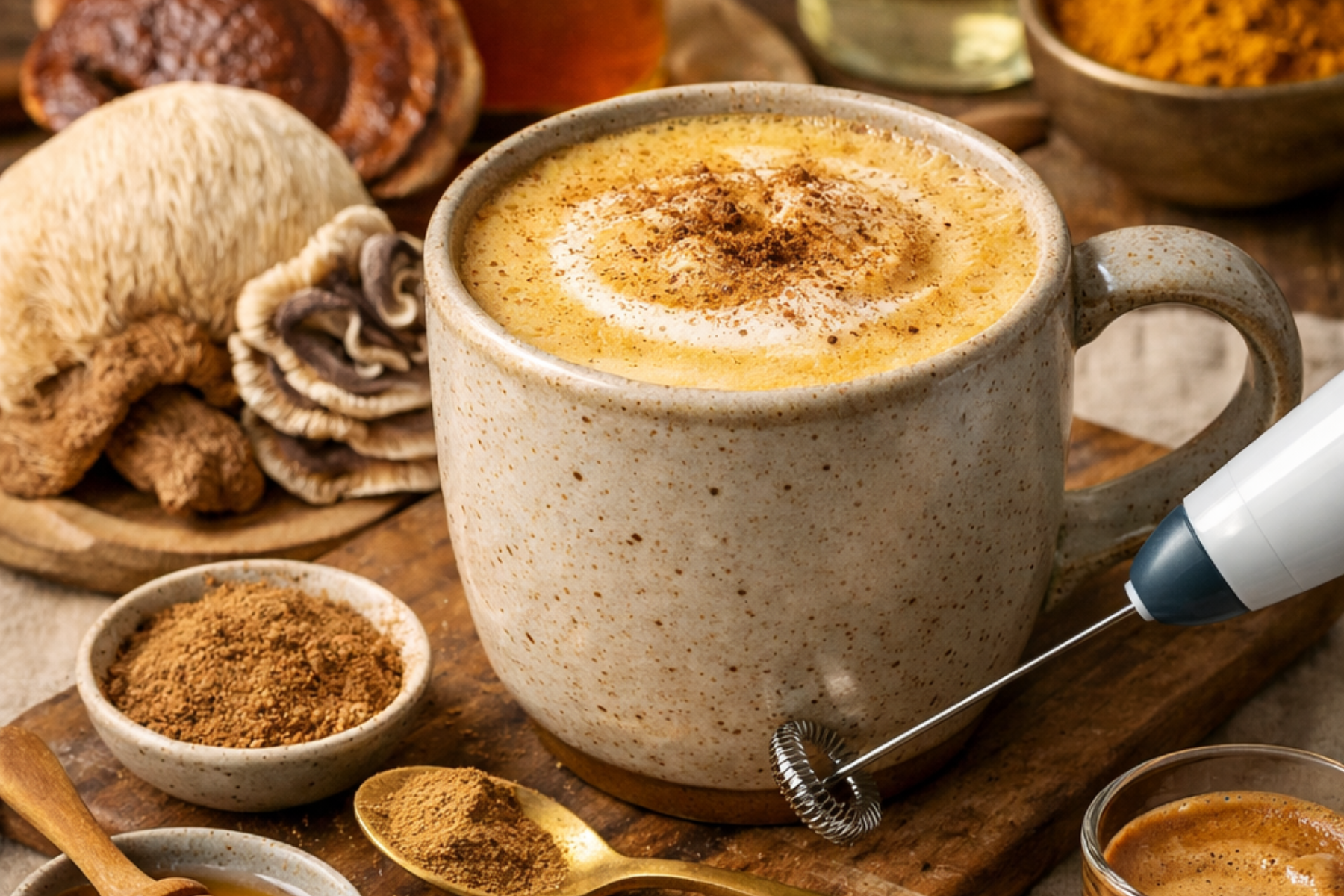
A Creamy Functional Mushroom Latte for Calm Energy and Immune Resilience
Some mornings call for more than just caffeine.
When the weather turns cold, stress runs high, or your body feels slightly run-down, a warm drink that supports your immune system can make a meaningful difference. This Immune Support Mushroom Morning Latte combines functional mushrooms, warming spices, and nourishing fats into a smooth, comforting drink that helps you start the day with calm, focused energy.
Unlike traditional coffee drinks that cause an energy spike followed by a crash, this latte provides steady nourishment from functional mushrooms rich in beta-glucans and antioxidant compounds—natural molecules studied for their role in immune balance and resilience [2,3].
Think of it as a daily ritual for resilience, not just another morning beverage.
Why Functional Mushrooms Are Trending in Wellness
Functional mushrooms have become increasingly popular in wellness routines because they support multiple systems in the body at once, including the immune system, gut health, and brain function.
Research shows that mushroom-derived beta-glucans interact with immune receptors on macrophages, dendritic cells, and natural killer cells, helping maintain balanced immune signaling and healthy inflammatory responses [2,3].
At the same time, mushrooms like Lion's Mane, Reishi, and Turkey Tail contain polysaccharides and antioxidants that support the gut microbiome, which plays a major role in immune regulation and metabolic health [4].
Lion's Mane has also gained attention for its potential role in brain health. Human clinical research has shown that regular intake of Lion's Mane mushroom may support cognitive performance and neural function, likely related to compounds that stimulate nerve growth factor (NGF) activity [5].
Together, these properties make functional mushrooms a simple way to incorporate adaptogenic-like plant compounds into everyday routines.
And one of the easiest ways to enjoy them? A warm, comforting mushroom latte.
Immune Support Mushroom Morning Latte Recipe
Serves: 1 latte
Prep Time: 5 minutes
Ingredients
- 1 cup unsweetened almond milk (or oat, coconut, or dairy milk)
- 1/4 teaspoon Organic Mushroom Powder Extract Superfood 10
- 1 teaspoon raw honey or maple syrup
- ½ teaspoon cinnamon
- ¼ teaspoon turmeric
- 1 pinch black pepper (helps improve turmeric absorption)
- ½ teaspoon coconut oil or MCT oil
- ½ teaspoon vanilla extract
- Optional: ½ shot espresso or green tea for gentle caffeine
How to Make a Mushroom Latte
1. Warm the Milk
In a small saucepan, gently heat the milk over medium-low heat until warm but not boiling.
2. Add the Mushroom Powders
Whisk in the Organic Mushroom Powder Extract powders until fully dissolved.
3. Add Spices and Sweetener
Stir in cinnamon, turmeric, black pepper, honey (or maple syrup), vanilla extract, and coconut oil.
4. Blend for a Creamy Texture
For a smooth café-style texture, blend the mixture for 10–15 seconds using a small blender or handheld milk frother.
5. Serve Warm
Pour into your favorite mug and enjoy slowly.
Why These Ingredients Work Together
Functional Mushrooms
Lion's Mane, Reishi, and Turkey Tail are rich in beta-glucans and polysaccharides, compounds widely studied for supporting immune activity and microbiome balance [2,3]. Lion's Mane is also studied for its potential role in supporting nerve growth factor and cognitive clarity, making it popular in brain-support formulas [5].
Cinnamon and Turmeric
These warming spices contain polyphenols and antioxidant compounds that support healthy inflammatory balance and metabolic health. Turmeric's active compound, curcumin, is better absorbed when paired with black pepper, which enhances bioavailability.
Healthy Fats
Coconut oil or MCT oil helps:
- Improve absorption of fat-soluble nutrients
- Support steady energy production
- Add a creamy, satisfying texture
Raw Honey
Honey provides natural sweetness and contains trace enzymes and antioxidant compounds that complement the drink's warming flavor.
Optional Add-Ons to Customize Your Mushroom Latte
One of the best things about a mushroom latte is how easily you can tailor it to your needs.
For Focus: Add ½ teaspoon cacao powder or ½ teaspoon matcha
For Extra Immune Support: Add a pinch of ginger or a few drops of lemon
For Relaxation: Add a dash of nutmeg or a small amount of ashwagandha powder
Health Benefits of a Mushroom Morning Latte
Adding functional mushrooms to your morning routine may help support:
Immune Balance
Beta-glucans from mushrooms interact with immune receptors that help regulate immune responses [2].
Gut Health
Mushroom polysaccharides act as prebiotic fibers, supporting beneficial gut bacteria that influence immune and metabolic health [4,6].
Cognitive Clarity
Lion's Mane contains compounds studied for supporting nerve growth factor and brain function [5].
Antioxidant Protection
Many medicinal mushrooms contain antioxidants that help protect cells from oxidative stress and environmental challenges [3].
Tips for the Best Mushroom Latte
1. Use High-Quality Mushroom Powders
Look for extracts standardized for beta-glucans and tested for purity. Ideally, choose products made from actual mushroom fruiting bodies, not powders filled with grain-grown mycelium or starch-based fillers. Fruiting body extracts typically contain higher levels of the beneficial beta-glucans studied in mushroom research.
2. Blend Instead of Stirring
Blending creates the creamy café-style texture most people expect from a latte.
3. Adjust Sweetness Slowly
Functional mushrooms can have a slightly earthy taste, so start with a small amount of honey or maple syrup.
4. Try Different Milk Bases
Oat milk produces the creamiest texture, while almond milk keeps the drink lighter.
Frequently Asked Questions
Do mushroom lattes contain caffeine?
Most mushroom lattes are naturally caffeine-free unless you add coffee, matcha, or tea.
What do mushroom lattes taste like?
When blended with spices like cinnamon and vanilla, the flavor is warm, creamy, and slightly earthy.
Can I drink a mushroom latte every day?
Yes. Many people use mushroom powders daily as part of a wellness routine.
Are mushroom powders safe?
Mushrooms used in supplements are generally well tolerated, but it's best to follow serving directions and consult your healthcare provider if you have medical conditions.
A Simple Daily Ritual for Resilience
One of the reasons functional mushrooms are trending in wellness is surprisingly simple: they fit naturally into the routines people already love.
Instead of adding another complicated supplement schedule, many people are choosing to weave supportive ingredients into everyday rituals—especially their morning drink.
A mushroom latte takes only minutes to prepare, yet it delivers compounds studied for supporting:
- Immune balance
- Gut health
- Antioxidant protection
- Mental clarity
That's why functional mushrooms resonate with so many people today. They're not about chasing quick fixes—they're about building small, sustainable habits that support how you want to feel each day.
And perhaps just as importantly, a warm mushroom latte creates a quiet moment before the noise of the day begins.
Because the people who prioritize their well-being often start with something simple: a nourishing ritual, a few intentional ingredients, and a warm mug in their hands.
References
- Dai, X., et al. (2015). Consumption of Lentinula edodes (shiitake mushrooms) improves human immune function. Journal of the American College of Nutrition, 34(6), 478–487. https://pubmed.ncbi.nlm.nih.gov/25866155/
- Vetvicka, V., & Vetvickova, J. (2014). β-Glucan improves immune status in healthy adults: A randomized, double-blind, placebo-controlled trial. Journal of the American College of Nutrition, 33(6), 499–507. https://pubmed.ncbi.nlm.nih.gov/25738142/
- Wasser, S. P. (2014). Medicinal mushroom science: Current perspectives and advances. Applied Microbiology and Biotechnology, 98(12), 5381–5394. https://pubmed.ncbi.nlm.nih.gov/25179726/
- Zhao, J., et al. (2023). Interaction between mushroom polysaccharides and gut microbiota. Foods, 12(1), 89. https://pubmed.ncbi.nlm.nih.gov/36671814/
- Mori, K., et al. (2009). Improving effects of Hericium erinaceus on mild cognitive impairment. Phytotherapy Research, 23(3), 367–372. Link
- Cryan, J. F., & Dinan, T. G. (2012). Mind-altering microorganisms: The impact of the gut microbiota on brain and behaviour. Nature Reviews Neuroscience, 13(10), 701–712. https://pubmed.ncbi.nlm.nih.gov/22968153/
*These statements have not been evaluated by the Food and Drug Administration. This information is for educational purposes only and is not intended to diagnose, treat, cure, or prevent any disease.


