

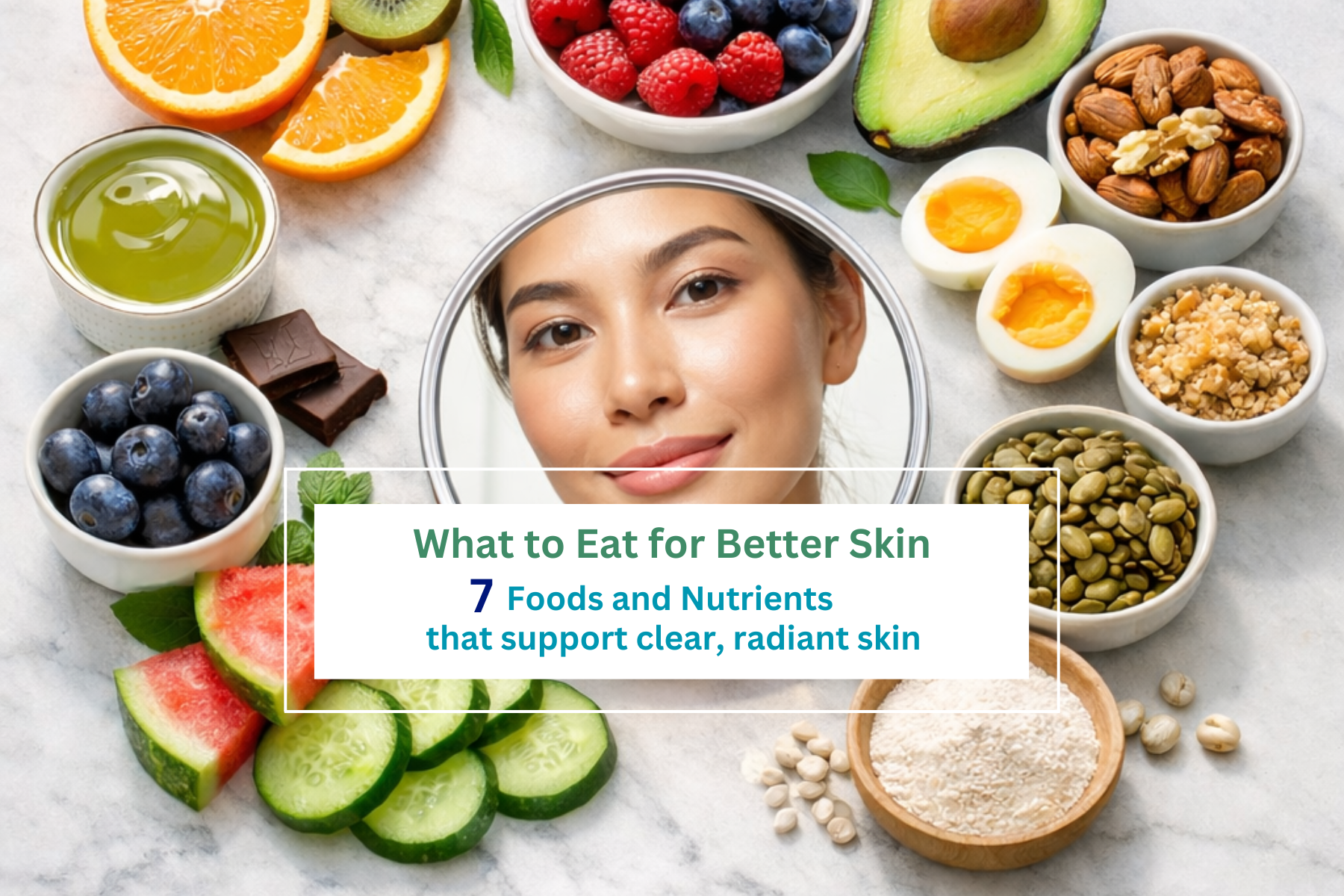
The Truth About Clear Skin Most People Miss
You can invest in skincare. Follow routines. Try every trending product.
But if your skin still feels off—dry, dull, or unpredictable—there's a deeper reason:
Your skin is built from what you eat.
Every day, your body uses nutrients to:
- Repair skin cells
- Maintain hydration
- Protect against environmental stress
If those nutrients aren't there, your skin reflects it.
That's why one of the most effective ways to support clear, glowing skin is through your diet.
Why Diet Matters for Skin Health
Your skin is your body's largest organ—and one of the most metabolically active.
It constantly renews itself using:
- Protein (for structure)
- Healthy fats (for hydration)
- Vitamins and minerals (for repair and protection)
- Antioxidants (for defense against damage)
Scientific research confirms that nutrition plays a direct role in skin aging, elasticity, and overall appearance (1,2).
Without consistent nutritional support, skin may struggle with:
- Breakouts
- Dryness
- Uneven tone
- Loss of elasticity
The solution isn't more products—it's better inputs.
7 Best Foods for Clear, Radiant Skin
1. Vitamin C–Rich Fruits (Citrus, Mango, Berries)
Best for: Collagen production and skin brightness
Vitamin C is essential for collagen synthesis and helps protect the skin from oxidative damage caused by UV exposure and pollution (3).
Top foods: Oranges, Mango, Strawberries, Kiwi
2. Healthy Fats (Avocado, Nuts, Seeds)
Best for: Skin hydration and barrier function
Healthy fats—especially essential fatty acids—support the skin barrier and reduce water loss, improving hydration and smoothness (4).
Top foods: Avocado, Almonds, Chia seeds, Flaxseeds
3. Protein (Collagen, Eggs, Plant Proteins)
Best for: Skin repair and elasticity
Amino acids from dietary protein are required for collagen and elastin production, which maintain skin strength and elasticity (5). Protein intake also helps stabilize blood sugar, which can influence skin clarity and inflammation.
4. Zinc-Rich Foods (Pumpkin Seeds, Legumes)
Best for: Acne support and skin healing
Zinc plays a role in regulating oil production, supporting immune function, and reducing inflammation associated with acne (6).
Top foods: Pumpkin seeds, Chickpeas, Cashews
5. Hydrating Foods
Best for: Skin plumpness and glow
Adequate hydration supports skin thickness, elasticity, and overall appearance (7). Water-rich foods contribute to hydration at the cellular level.
Top foods: Coconut water, Cucumber, Watermelon
6. Antioxidant-Rich Foods
Best for: Protection against premature aging
Antioxidants help neutralize free radicals, reducing oxidative stress that contributes to skin aging (2,8).
Top sources: Blueberries, Green tea, Dark chocolate (70%+)
7. Mineral-Rich Beauty Nutrients (Pearl Powder, Trace Minerals)
Best for: Skin vitality and long-term radiance
Minerals such as calcium, magnesium, and zinc play roles in skin cell turnover, hydration, and antioxidant defense (1). Traditional ingredients like pearl powder contain amino acids, bioavailable calcium, and trace minerals. Emerging research suggests these compounds may support skin structure and antioxidant activity.
The Missing Link: Blood Sugar Balance and Skin
One of the most overlooked factors in skin health is blood sugar stability.
High-glycemic diets have been associated with increased acne and inflammation (9). Balancing meals with protein, healthy fats, and fiber helps slow glucose absorption and supports more stable skin function.
What to Avoid for Better Skin
You don't need to eliminate everything. But reducing excess intake of refined sugar, ultra-processed foods, and low-quality fats may help reduce oxidative stress and inflammation, both linked to skin aging and breakouts (2,9).
Simple Daily Routine for Healthier Skin
Start with:
- A nutrient-dense smoothie (protein + fats + antioxidants)
- Whole, minimally processed foods
- Consistent hydration
These small daily habits compound into visible changes.
Frequently Asked Questions
What foods improve skin the fastest?
Foods rich in vitamin C, healthy fats, and antioxidants tend to show the most noticeable impact over time.
Does diet really affect acne?
Yes. Studies link high-glycemic diets and low nutrient intake to increased acne severity (9).
How long does it take to see results?
Skin renewal cycles typically take 3–4 weeks, so consistent nutrition is key.
The Bottom Line
Clear, radiant skin isn't created overnight. It's built—meal by meal—through what your body absorbs and uses.
Because in the end: Your skin is not just what you apply. It's what you consistently nourish it with.
References
- Schagen, S. K., et al. (2012). Discovering the link between nutrition and skin aging. Dermato-Endocrinology, 4(3), 298–307. https://pubmed.ncbi.nlm.nih.gov/23467449/
- Pullar, J. M., Carr, A. C., & Vissers, M. C. (2017). The roles of vitamin C in skin health. Nutrients, 9(8), 866. https://pubmed.ncbi.nlm.nih.gov/28805671/
- Telang, P. (2013). Vitamin C in dermatology. Indian Dermatology Online Journal, 4(2), 143–146. https://pubmed.ncbi.nlm.nih.gov/23741676/
- Lin, T. K., Zhong, L., & Santiago, J. L. (2018). Anti-inflammatory and skin barrier repair effects of fatty acids. International Journal of Molecular Sciences, 19(1), 70. https://www.mdpi.com/1422-0067/19/1/70
- Proksch, E., et al. (2014). Oral supplementation of specific collagen peptides. Skin Pharmacology and Physiology, 27(3), 113–119. https://pubmed.ncbi.nlm.nih.gov/23949208/
- Dreno, B., et al. (2018). Role of zinc in acne and dermatology. Dermatology Research and Practice, 2018. https://pubmed.ncbi.nlm.nih.gov/29193602/
- Palma, L., et al. (2015). Dietary water affects skin hydration and biomechanics. Clinical, Cosmetic and Investigational Dermatology, 8, 413–421. https://pmc.ncbi.nlm.nih.gov/articles/PMC4529263/
- Nichols, J. A., & Katiyar, S. K. (2010). Skin photoprotection by natural antioxidants. Photodermatology, Photoimmunology & Photomedicine, 26(6), 275–285. https://pubmed.ncbi.nlm.nih.gov/19898857/
- Smith, R. N., et al. (2007). A low-glycemic-load diet improves acne. American Journal of Clinical Nutrition, 86(1), 107–115. https://pubmed.ncbi.nlm.nih.gov/17616769/


