

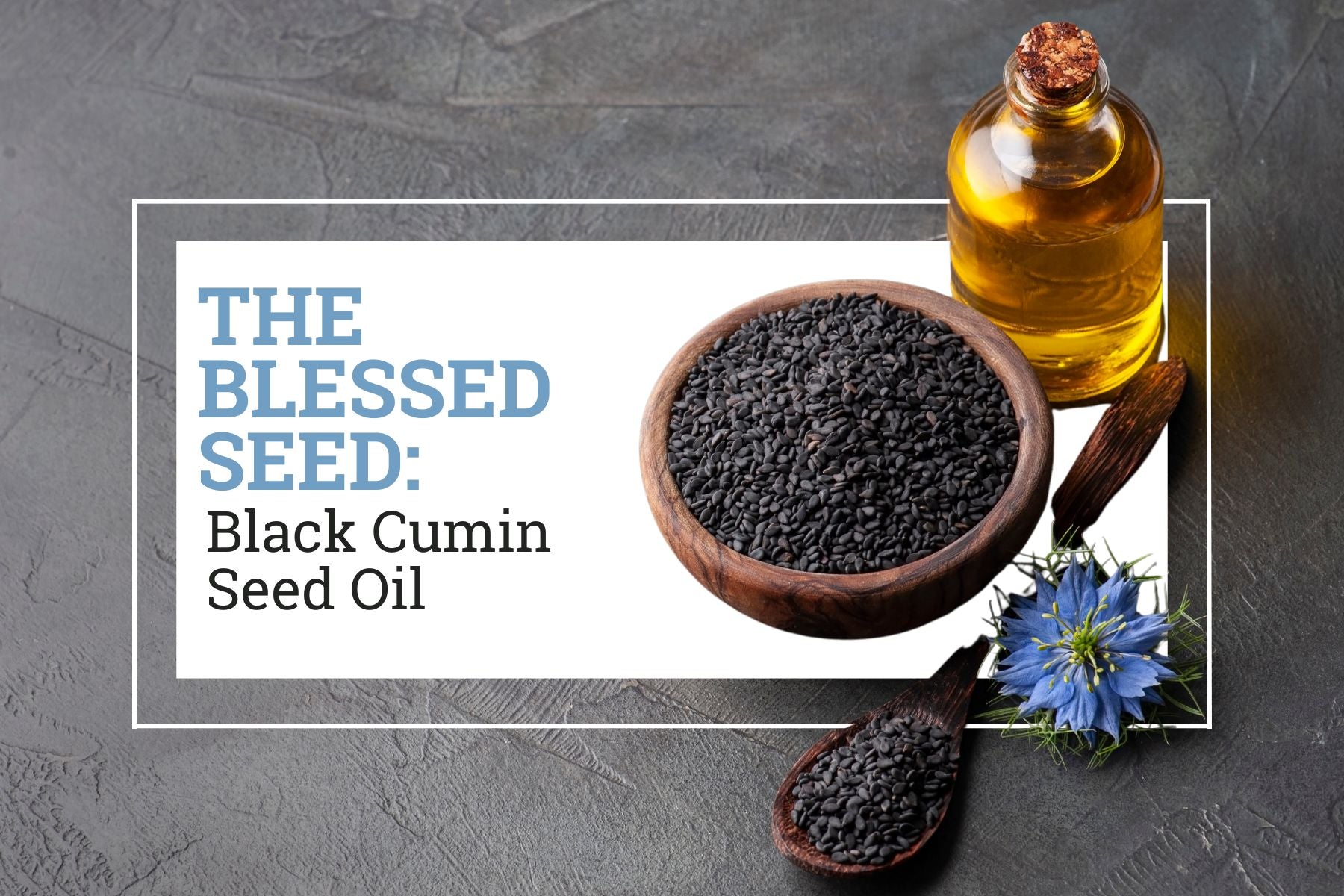
Some ingredients become popular because they are new.
Black seed oil is different.
It keeps coming back because it was never really forgotten.
For more than 2,000 years, the tiny black seeds of Nigella sativa have been used in kitchens, herbal traditions, and daily wellness routines across the Middle East, North Africa, South Asia, and parts of Europe. In Arabic tradition, black seed is often called Habbatul Barakah, which means the seed of blessing. That is where the name Blessed Seed comes from [1].
Today, black seed oil is showing up again in wellness routines, not because history alone proves it works, but because modern research is helping explain why people valued it for so long.
The better question is not, "Is black seed oil a miracle?"
The better question is:
What did traditional cultures notice about black seed oil that modern science can now explain?
That is where the story gets interesting.
Quick Answer: What Is Black Seed Oil Good For?
Black seed oil is pressed from the seeds of Nigella sativa, also called black cumin, black cumin seed, or kalonji.
Modern research suggests it may help support:
- Metabolic wellness
- Healthy cholesterol levels already within the normal range
- Healthy blood sugar balance already within the normal range
- Antioxidant defenses
- A balanced inflammatory response
- Immune system balance
- Digestive comfort
- Skin and scalp wellness
Its most studied compound is thymoquinone, a natural plant compound found in the volatile oil portion of the seed [2]..
The Many Names of Black Seed Oil
One reason black seed oil can be confusing is that it has many names.
They all point back to the same plant: Nigella sativa.
Common names include:
- Black seed oil
- Black cumin seed oil
- Black cumin
- Kalonji
- Nigella sativa
- Blessed Seed
- Habbatul Barakah
One important note: black cumin is not the same as regular cumin.
Regular cumin comes from Cuminum cyminum.
Black cumin comes from Nigella sativa.
They are different plants with different compounds, flavors, and traditional uses.
Why the "Blessed Seed" Name Still Matters
The name Blessed Seed is not just a marketing phrase.
It reflects how deeply black seed was woven into daily life.
Traditional cultures used the seeds and oil in three main ways:
As food
The seeds were added to breads, stews, pickles, and spice blends.
As oil
The oil was used by mouth and sometimes applied to the skin or scalp.
As part of herbal wellness routines
Black seed was used in traditional systems such as Unani, Ayurveda, Siddha, and regional Middle Eastern practices [1].
That matters because traditional use was not random. People kept using black seed because it fit daily life. It was bitter, sharp, warming, and strong. It was not treated like candy. It was treated like something useful.
Modern science is now looking at the seed through a different lens.
Instead of asking only, "What was it used for?" researchers are asking:
- What compounds are inside it?
- How do those compounds act in the body?
- What does human research show?
- Where is the evidence strongest?
- Where do we still need better studies?
That is the difference between folklore and responsible modern use.
The Science Behind Black Seed Oil: More Than One Compound
Most people hear about thymoquinone first.
That makes sense. Thymoquinone is the star compound in black seed oil. It is studied for its role in antioxidant activity, immune signaling, and healthy inflammatory response pathways [2].
But black seed oil is not just thymoquinone.
It also contains a plant-based matrix of:
- Volatile oils
- Fatty acids
- Tocopherols
- Phytosterols
- Alkaloids
- Saponins
- Polyphenol-like compounds
This matters because whole botanicals do not act like single-ingredient drugs. Their value often comes from a blend of compounds working together.
That also means quality matters.
Two bottles of black cumin seed oil can look similar but differ in thymoquinone content, freshness, seed origin, extraction method, oxidation level, and storage quality. A 2024 chemical analysis found wide variation in the composition and quality of different Nigella sativa seed oils, including differences in thymoquinone and other volatile compounds [3].
In plain English:
The label matters. The source matters. The bottle matters. The testing matters.
What Traditional Use Got Right
Traditional systems did not have modern lab markers.
They did not measure lipid panels, oxidative stress markers, or inflammatory signaling proteins.
But they did observe patterns.
Across cultures, black seed was commonly used to support:
- Digestion
- Skin comfort
- Respiratory wellness
- Vitality
- General resilience
- Everyday balance
Now, several traditional uses have enough human research to take seriously.
1. Black Seed Oil and Metabolic Wellness
This is one of the strongest areas of research.
Modern studies have explored how Nigella sativa affects markers tied to metabolic wellness, including lipid balance and blood sugar regulation.
A 2025 GRADE-assessed systematic review and dose-response meta-analysis looked at 82 randomized controlled trials and found that Nigella sativa supplementation was associated with favorable changes in several heart and metabolic markers. The authors still noted that study quality varied, which means the findings are promising but not final [4].
A separate 2024 systematic review and meta-analysis of 30 randomized controlled trials also reported favorable changes in blood sugar-related markers in adults, while calling for stronger studies on ideal dosage and duration [5].
Black seed oil may help support healthy metabolic function, including healthy blood sugar balance and cholesterol levels already within the normal range.
This means black seed oil may be useful as part of a routine that already includes:
- Fiber-rich meals
- Enough protein
- Daily movement
- Strength training
- Sleep consistency
- Lower intake of ultra-processed foods
2. Black Seed Oil and Antioxidant Defense
Oxidative stress is part of normal life.
Your body creates free radicals during metabolism, exercise, digestion, and exposure to environmental stressors. This is not always bad. The body uses oxidative signals for normal function.
The issue is balance.
When oxidative stress rises faster than the body can respond, cells need stronger antioxidant support.
This is where Nigella sativa is interesting.
A 2023 updated systematic review and meta-analysis of randomized controlled trials found that black seed supplementation was linked with favorable changes in markers related to oxidative stress and inflammatory balance [6].
3. Thymoquinone: The Compound That Explains the Hype
Thymoquinone is the compound most often tied to black seed oil's modern reputation.
It has been studied for its role in:
- Antioxidant pathways
- Healthy inflammatory response signaling
- Immune system balance
- Cellular protection
- Metabolic function [2]
One reason researchers pay attention to thymoquinone is that it appears to act on more than one pathway.
That may help explain why black seed had such wide traditional use.
Thymoquinone helps explain why black seed oil is biologically active, but human studies are still needed to define the best dose, form, and long-term use.
4. Immune and Respiratory Wellness
Traditional use of black cumin seeds often included seasonal and respiratory support.
Modern research has explored this area too.
Human trials have studied Nigella sativa supplementation in adults with respiratory concerns. One randomized, double-blind, placebo-controlled trial found supportive results for respiratory comfort and immune-related markers [7].
For a deeper look at why black seed oil is getting renewed attention today, read: Why Everyone Is Talking About Black Seed Oil...Again.
5. Digestive Comfort and Gut Balance
Traditional use of black seed often involved digestion.
That makes sense from a culinary point of view. Bitter, aromatic seeds have been used in food cultures around the world to support comfort after meals.
Black seed contains compounds that give it a sharp, peppery taste. That taste is part of why people often take it with food instead of on an empty stomach.
Modern research has explored black seed in digestive settings, but this area is more mixed than metabolic research.
The practical takeaway:
Black seed oil may support digestive comfort when taken consistently with meals.
Best use tips:
- Take it with food.
- Start with a small amount.
- Avoid taking too much too soon.
- Stop if it causes discomfort.
- Ask a healthcare provider if you take medications or have a medical condition.
More is not better. Consistency is better.
6. Skin and Scalp Wellness
Black seed oil has a long history of topical use.
People have applied it to dry skin, scalp, and rough areas for generations. Today, skin-related research is still developing, but it is one of the more interesting traditional-modern overlaps.
A 2022 systematic review of randomized controlled trials looked at Nigella sativa in different skin-related uses and found promising results, while noting that more standardized research is needed [8].
It may also be used as part of a scalp routine for:
- Dry-feeling scalp
- Hair shine
- Scalp comfort
- Moisture support
Patch test first. Some people are sensitive to botanical oils.
7. Everyday Vitality: Why People Still Take It Daily
The old use of black seed was not narrow.
It was part of a daily wellness culture.
People used it with food. They used it in oil form. They used it as a household staple.
That is probably the best way to understand it today.
Black seed oil is not a stimulant.
It is not meant to give a quick caffeine-like lift.
Instead, it supports systems tied to steady daily function:
- Metabolism
- Digestion
- Antioxidant balance
- Immune balance
- Skin and scalp wellness
That is why it fits best as a daily routine supplement rather than a "take it once and feel everything change" product.
Product quality varies.
Because thymoquinone and other compounds can vary by seed origin, processing, storage, and testing, a cheap oil may not deliver the same experience as a well-made one [3].
How to Choose a High-Quality Black Seed Oil
Not all black seed oil is the same.
Use this checklist before buying.
| What to Look For | Why It Matters |
|---|---|
| Nigella sativa on the label | Confirms the correct plant |
| Cold-pressed oil | Helps preserve the natural oil profile |
| Dark bottle | Helps protect delicate compounds from light |
| Third-party testing | Supports purity and label trust |
| Thymoquinone information | Shows the brand is measuring key active compounds |
| No fillers or artificial additives | Keeps the formula clean |
| Fresh, peppery taste | Often signals a potent oil, though taste alone is not proof |
A strong taste does not automatically mean a better product.
Testing matters more than taste.
Capsules vs. Liquid Black Seed Oil
Both forms can work. The better choice depends on the person.
| Form | Best For | Watch-Outs |
|---|---|---|
| Liquid black seed oil | Flexible use, mixing with food, topical use | Strong taste; easy to overpour |
| Black seed oil capsules | Convenience, travel, measured serving | Less useful for skin or scalp use |
| Black seed powder | Food-based use, cooking, traditional routines | Harder to standardize active compounds |
If someone wants the most traditional experience, liquid oil feels closest.
If someone wants consistency, capsules may be easier.
How to Take Black Seed Oil
Always follow the product label.
A common routine is:
- Take with food.
- Start low.
- Use daily for consistency.
- Avoid high doses unless guided by a healthcare provider.
Many people prefer taking black cumin seed oil with breakfast or dinner because the taste is strong.
Ways to use it:
- Mix into a spoonful of honey.
- Use as a finishing oil on low-heat foods.
- Apply a small amount to dry skin or scalp after patch testing.
- Use mouthwash first, then take black seed oil to help mask the taste.
Do not use black seed oil as a frying oil. Heat can affect delicate compounds.
Side Effects and Safety
Black seed oil is generally well tolerated when used appropriately, but it is still a concentrated botanical oil.
Possible side effects may include:
- Digestive upset
- Nausea
- Skin sensitivity
- Allergic reaction
- A strong aftertaste
A safety review found that Nigella sativa has been studied in several forms, but product type, dose, and duration matter [10]. A phase I clinical trial of a thymoquinone-rich black cumin oil also reported good tolerability in healthy adults at the studied dose and duration [11].
Speak with a healthcare provider before use if you:
- Are pregnant or nursing
- Take medication
- Have a medical condition
- Are preparing for surgery
- Have known allergies to seeds or botanical oils
- Plan to use it with children
Stop use if you notice an unwanted reaction.
Key Takeaways
- Black seed oil comes from Nigella sativa, a plant used for more than 2,000 years.
- In Arabic tradition, it is known as Habbatul Barakah, or the Blessed Seed.
- Traditional use centered on digestion, skin comfort, respiratory wellness, and daily vitality.
- Modern research focuses on thymoquinone, antioxidant balance, immune signaling, and metabolic markers.
- The strongest modern support is in metabolic wellness, antioxidant defenses, and healthy inflammatory response.
- Product quality varies, so sourcing, extraction, packaging, and testing matter.
- Black seed oil works best as part of a routine—not as a quick fix.
FAQ: Black Seed Oil, the Blessed Seed, and Modern Use
What is black seed oil?
Black seed oil is an oil pressed from the seeds of Nigella sativa, a flowering plant used in traditional food and wellness practices across the Middle East, North Africa, South Asia, and Europe.
Why is black seed called the Blessed Seed?
In Arabic tradition, black seed is known as Habbatul Barakah, often translated as the seed of blessing or Blessed Seed. The name reflects its long-standing role in traditional wellness practices [1].
What are the main black seed oil benefits?
Black seed oil may support metabolic wellness, immune balance, digestive comfort, antioxidant defenses, and skin and scalp health.
What is thymoquinone?
Thymoquinone is one of the most studied natural compounds in Nigella sativa. It is linked to antioxidant activity, immune balance, and healthy inflammatory response pathways [2].
Is black cumin seed oil the same as cumin?
No. Black cumin seed oil comes from Nigella sativa. Regular cumin comes from Cuminum cyminum. They are different plants.
Can I take black seed oil every day?
Many people use it daily. Start with the serving size on the label and take it with food. Ask a healthcare provider if you are pregnant, nursing, taking medication, or managing a health condition.
Should I choose capsules or liquid oil?
Choose liquid oil if you want flexible use for food, skin, or scalp. Choose capsules if you want convenience and a measured serving.
Does black seed oil work right away?
Black seed oil is better understood as a consistency supplement. It is not a stimulant or quick fix. Most people use it as part of a daily routine.
Why the Blessed Seed Still Belongs in the Modern Conversation
The real story of black seed oil is not that ancient people were always right or that modern science has all the answers.
The real story is better than that.
A tiny seed earned a place in food, tradition, and household wellness for centuries. Now, researchers are finding that its value may come from a complex mix of natural compounds, especially thymoquinone, that help support balance in the body.
That does not make black seed oil magic.
It makes it useful.
And in a wellness world full of loud promises, useful is enough.
To add black seed oil to your daily routine, choose a clean, well-tested option and take it consistently with food.
Shop Nourishing Nutrients Organic Black Cumin Seed Oil.
FDA and Healthcare Provider Disclaimer
These statements have not been evaluated by the Food and Drug Administration. This product is not intended to diagnose, treat, cure, or prevent any disease. This article is for educational purposes only and is not a substitute for medical advice. Always consult your healthcare provider before starting any new supplement, especially if you are pregnant, nursing, taking medication, preparing for surgery, or managing a medical condition.
References
[1] Ahmad A, Husain A, Mujeeb M, et al. Asian Pacific Journal of Tropical Biomedicine. 2013. PMID: 23646296. DOI: 10.1016/S2221-1691(13)60075-1.
https://pubmed.ncbi.nlm.nih.gov/23646296/
[2] Tavakkoli A, Mahdian V, Razavi BM, Hosseinzadeh H. Journal of Pharmacopuncture. 2017. PMID: 28883911.
https://pmc.ncbi.nlm.nih.gov/articles/PMC5633670/
[3] Dąbrowski G, Czaplicki S, Konopka I. Variation in the Composition and Quality of Nigella sativa L. Seed Oils-The Underestimated Impact on Possible Health-Promoting Properties. Molecules.
https://pmc.ncbi.nlm.nih.gov/articles/PMC10975171/
[4] Jafari A, Mardani H, Faghfouri AH, et al. Pharmacological Research. 2025. PMID: 40714301. DOI: 10.1016/j.phrs.2025.107882.
https://pubmed.ncbi.nlm.nih.gov/40714301/
[5] Shirvani S, Falahatzadeh M, Oveili E, et al. Prostaglandins & Other Lipid Mediators. 2024. PMID: 39181437. DOI: 10.1016/j.prostaglandins.2024.106885.
https://pubmed.ncbi.nlm.nih.gov/39181437/
[6] Kavyani Z, Musazadeh V, Golpour-Hamedani S, et al. Inflammopharmacology. 2023. DOI: 10.1007/s10787-023-01213-0.
https://pubmed.ncbi.nlm.nih.gov/37036558/
[7] Koshak AE, Wei L, Koshak EA, et al. Phytotherapy Research. 2017. PMID: 28093815. DOI: 10.1002/ptr.5761.
https://pubmed.ncbi.nlm.nih.gov/28093815/
[8] Nasiri N, Ilaghi Nezhad M, Sharififar F, Khazaneha M, Najafzadeh MJ, Mohamadi N. Evidence-Based Complementary and Alternative Medicine. 2022. PMID: 36518853. DOI: 10.1155/2022/7993579.
https://pubmed.ncbi.nlm.nih.gov/36518853/
[9] Li Z, Wang Y, Xu Q, et al. Frontiers in Nutrition. 2023. PMID: 37057067. DOI: 10.3389/fnut.2023.1107750.
https://www.frontiersin.org/journals/nutrition/articles/10.3389/fnut.2023.1126272/full
[10] Mashayekhi-Sardoo H, Rezaee R, Karimi G. Asian Biomedicine. 2020. PMID: 37551386. DOI: 10.1515/abm-2020-0020.
https://pubmed.ncbi.nlm.nih.gov/37551386/
[11] Thomas JV, et al. Toxicology Reports. 2022. PMID: 36518481. DOI: 10.1016/j.toxrep.2022.04.020.
https://pubmed.ncbi.nlm.nih.gov/36518481/


