

Fact checked by Rebecca Thornton, M.S., Food Science and Human Nutrition
Quick answer: One 3.75-ounce can of Atlantic sardines packed with their bones has about 351 mg of calcium. A cup of 2% milk has about 293 mg [1][2]. The catch is the bones. Buy sardines with bones and skin, mash them right into this 10-minute toast, and you won't notice them.
Why Most People Skip Sardines (and the Mistake That Costs Them)
Everyone says to eat more fish. Then you stand in the canned fish aisle and reach for anything but canned sardines. They look intimidating. The tiny bones feel like a problem.
So people who do try them often buy "boneless, skinless" sardines to make it easier. That choice removes the part that makes sardines special. USDA's calcium numbers are for sardines eaten with their bones [1]. The soft bones are where the calcium lives.
This recipe fixes both problems. A lemony white bean spread hides the texture, and a quick mash turns the bones into nothing you can feel.
How Much Calcium Is in a Can of Sardines?
Here is the math, using USDA FoodData Central for each food.
| Food | Calcium |
|---|---|
| 1 can (3.75 oz) Atlantic sardines in oil, drained (92 g), with bones | 351 mg [1] |
| 1 cup (244 g) 2% milk | 293 mg [2] |
| 1 cup (244 g) whole milk | 276 mg [3] |
| Same weight (92 g) of Pacific sardines in tomato sauce, with bones | 221 mg [4] |
Two things jump out. A single can beats a glass of milk. And what's in the can matters: oil-packed Atlantic sardines carry more calcium per ounce than the tomato-sauce Pacific kind [1][4].
Boneless, skinless sardines aren't in the USDA table. Check their label's % Daily Value for calcium before you count on them.
Does Your Body Actually Absorb Calcium From Fish Bones?
It seems to, at least from small, soft-boned fish. In a study of 19 healthy young adults, calcium from small fish eaten whole was absorbed about as well as calcium from skim milk: 23.8% versus 21.8% [5].
One honest note: that study used small Bengali fish, not sardines. No study has measured calcium absorption from canned sardines specifically. The idea is the same, though. Small fish you eat bones and all can be a real calcium source [5].
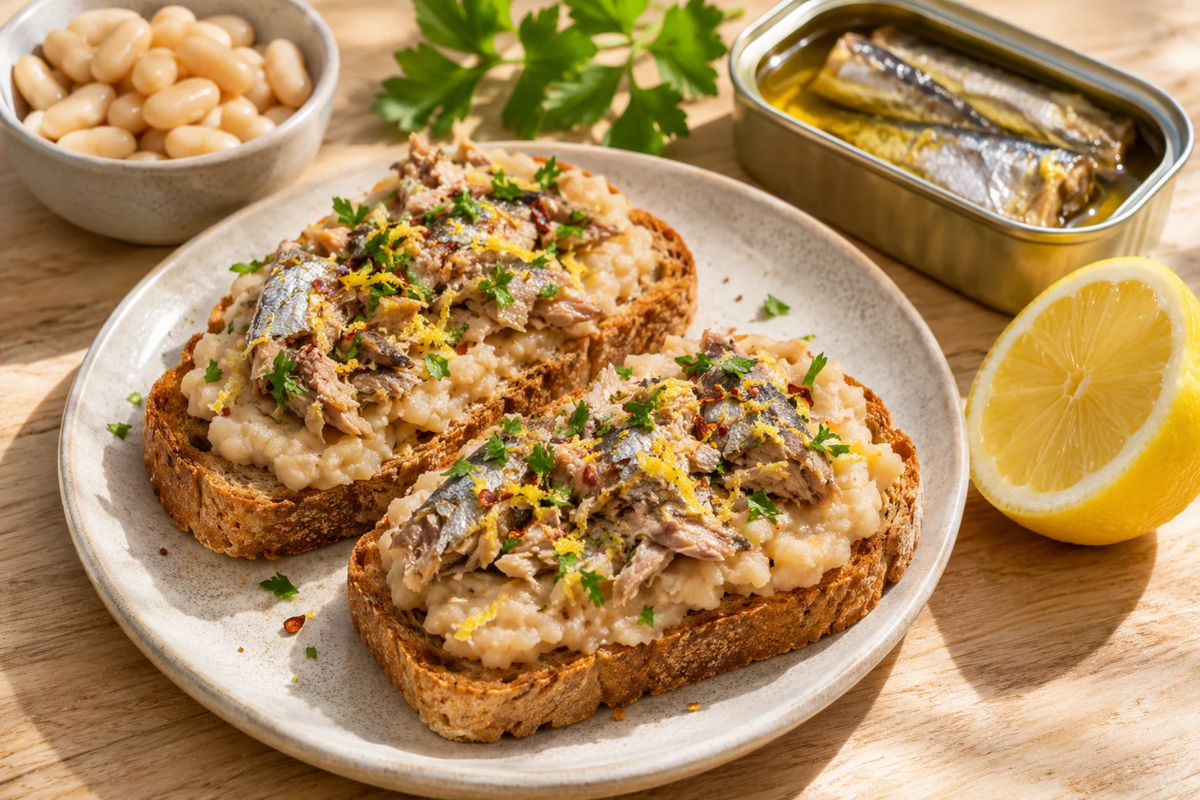
Lemony Sardine Toast
Serves: 2 | Time: 10 minutes
Ingredients
- 2 cans (3.75 oz, 106 g each) Atlantic sardines in olive oil, bone-in and skin-on, drained (about 184 g drained)
- 4 slices whole-wheat bread (about 128 g)
- 1/2 cup (88 g) canned white beans (great northern or cannellini), rinsed and drained
- 1 lemon (zest it first, then juice it for 2 tablespoons, 30 g)
- 1 tablespoon (14 g) extra-virgin olive oil
- 1 small garlic clove (3 g), finely grated
- 2 tablespoons (8 g) chopped fresh parsley
- Black pepper and red pepper flakes, to taste
- Optional: 1 teaspoon (3 g) capers, rinsed (adds sodium; not counted below)
Steps
- Toast the bread until crisp at the edges.
- Make the spread. In a small bowl, mash the beans with the lemon zest, 1 tablespoon (15 g) lemon juice, the olive oil, garlic and a few grinds of pepper. Leave it a little chunky.
- Mash the sardines. Tip the drained sardines onto a plate. Press them with a fork until the backbones break up. Keep the bones in. This is where the calcium is.
- Build. Spread the beans over the toast. Pile on the sardines.
- Finish. Squeeze over the last tablespoon of lemon juice. Top with parsley, red pepper flakes and capers if you like.
Tip for first-timers: acid and crunch tame the "fishy" taste. Don't skip the lemon, and toast the bread well.
Nutrition per serving (2 toasts)
| Nutrient | Amount |
|---|---|
| Calories | 468 |
| Protein | 34 g |
| Fiber | 7 g |
| Calcium | 486 mg (351 mg from the sardines) |
| EPA + DHA omega-3s | 0.9 g |
| Vitamin D | 4.4 mcg |
| Sodium | 575 mg |
Calculated from USDA FoodData Central [1][6][7][8]. Bread brands vary, so check yours.
Are Sardines High in Mercury?
No. The FDA and EPA put sardines on their "Best Choices" list, the group lowest in mercury [9]. For people who are or might become pregnant or are breastfeeding, the agencies suggest 2 to 3 servings a week from that list [9].
Key Takeaways
- One can of bone-in Atlantic sardines has about 351 mg of calcium, more than a cup of milk [1][2].
- The calcium is in the soft bones. Boneless, skinless sardines give that up.
- Calcium from small fish eaten whole was absorbed about as well as milk calcium in a small human study [5].
- Sardines are on the FDA's lowest-mercury list [9].
- Each serving of this toast has 34 g protein and 0.9 g of EPA and DHA.
FAQ
Can you eat sardine bones?
Yes. Canned sardine bones are soft enough to mash with a fork. They are also the reason sardines are high in calcium [1].
Which canned sardines are best?
For calcium, choose bone-in, skin-on sardines. Atlantic sardines in oil had more calcium per ounce than Pacific sardines in tomato sauce in USDA data [1][4]. If you watch sodium, compare labels, since brands differ.
Are canned sardines healthy?
One can gives you about 23 g of protein, 0.9 g of EPA and DHA, and 351 mg of calcium [1]. They are also low in mercury [9].
How do I make sardines taste less fishy?
Lemon, vinegar or capers balance the flavor. Crisp toast helps too. Start with sardines mashed into a spread, like this one, before eating them whole.
Can I make this ahead?
The bean spread keeps 3 days in the fridge. Assemble the toast right before eating so it stays crisp.
Not a Sardine Person?
That's fair. Fish is one of the best food sources of the marine omega-3s EPA and DHA. If eating it most weeks isn't realistic, our Wild Caught Fish Eggs come from New Zealand hoki roe. Curious how roe compares with fish oil? Read fish egg capsules or fish oil. Want another easy fish dinner? Try our Persian herb and citrus sheet-pan salmon.
These statements have not been evaluated by the Food and Drug Administration. This product is not intended to diagnose, treat, cure, or prevent any disease. This recipe is for general education. Talk with your healthcare provider about your own needs, especially if you are pregnant, breastfeeding, or have been told to limit sodium.
References
- USDA FoodData Central. Fish, sardine, Atlantic, canned in oil, drained solids with bone (FDC 175139). fdc.nal.usda.gov
- USDA FoodData Central. Milk, reduced fat, fluid, 2% milkfat (FDC 171267). fdc.nal.usda.gov
- USDA FoodData Central. Milk, whole, 3.25% milkfat (FDC 171265). fdc.nal.usda.gov
- USDA FoodData Central. Fish, sardine, Pacific, canned in tomato sauce, drained solids with bone (FDC 175140). fdc.nal.usda.gov
- Hansen M, Thilsted SH, Sandström B, et al. Calcium absorption from small soft-boned fish. J Trace Elem Med Biol. 1998;12(3):148-154. PMID: 9857327
- USDA FoodData Central. Bread, whole-wheat, commercially prepared (FDC 172688). fdc.nal.usda.gov
- USDA FoodData Central. Beans, great northern, cooked, boiled, without salt (FDC 175191). fdc.nal.usda.gov
- USDA FoodData Central. Lemon juice, raw (FDC 167747). fdc.nal.usda.gov
- U.S. Food and Drug Administration. Advice about Eating Fish. fda.gov


