

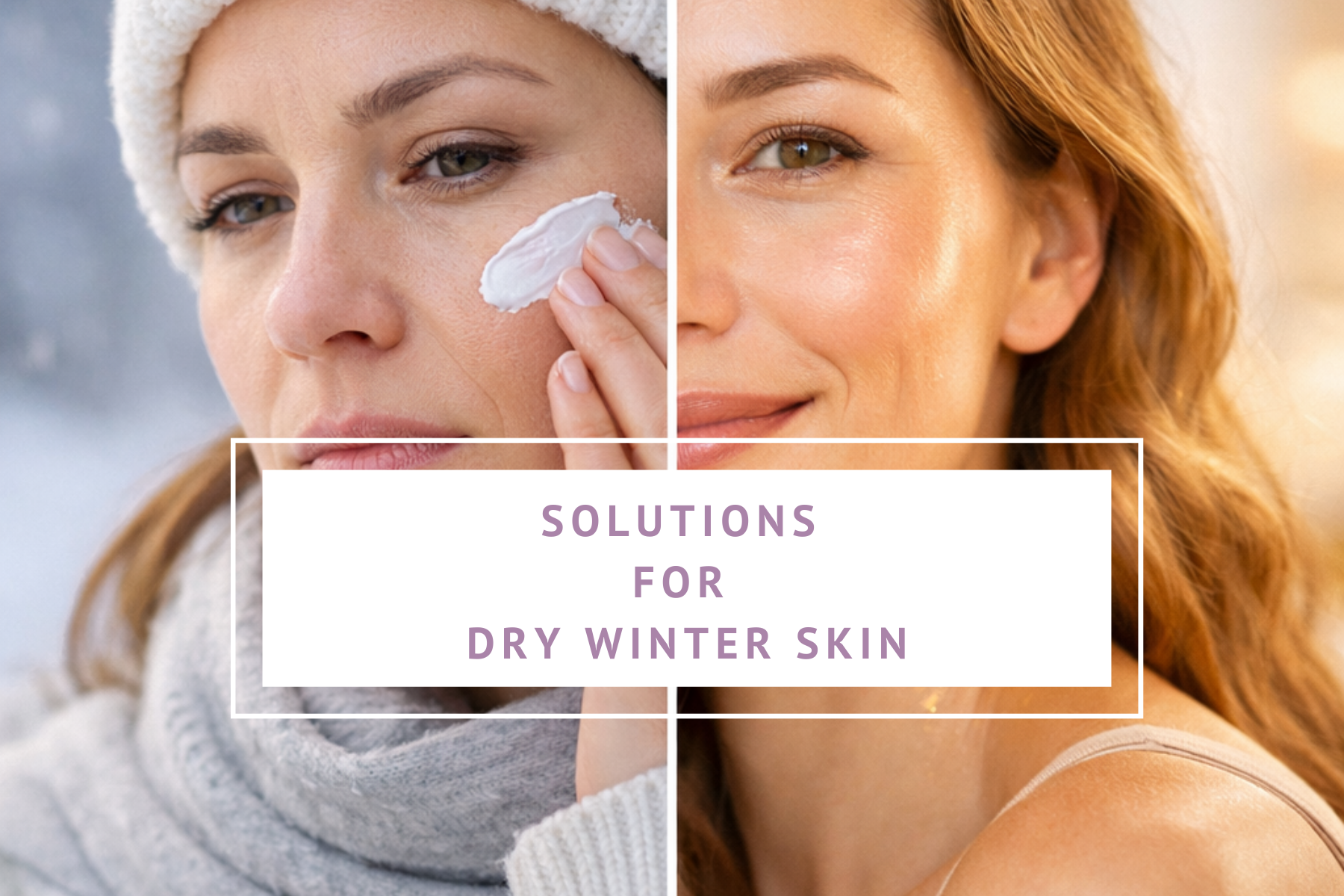
Why Winter Skin Care Fails So Many People
Contrary to popular advice, winter skin isn't solved at the surface.
It improves when you support the body from the inside out.
Every winter, people layer on heavier creams, switch cleansers, and buy "extra-hydrating" serums—yet their skin still feels tight, dull, flaky, or oddly tired-looking.
That's not because the products don't work.
It's because most winter skin advice only addresses the surface.
Your skin is a living organ. It renews itself from the inside out—using water, fats, minerals, amino acids, antioxidants, and circulation. When winter quietly disrupts those inputs, the skin barrier weakens no matter what you put on top.¹
The good news?
When you support the internal systems that build skin, winter dryness becomes far less dramatic—and often far more manageable.
Why Winter Is So Hard on Skin (Even If You're "Doing Everything Right")
Your skin depends on four internal systems to stay smooth and resilient:
- Hydration signaling
- Lipid-based barrier formation
- Mineral-dependent cell turnover
- Nighttime repair and renewal
Cold, dry air and indoor heating increase transepidermal water loss, while seasonal stress and reduced circulation slow barrier repair and lipid synthesis.³,⁴
Priority #1: Hydration That Reaches Skin Cells (Not Just Your Water Bottle)
Hydration isn't just about drinking more water. It's about cellular water retention, which depends on electrolytes and minerals that regulate fluid movement into skin cells.¹
Research shows that skin hydration relies on:
- Water availability
- Mineral balance
- Lipids that prevent moisture escape¹,²
Without adequate minerals, water remains in circulation instead of hydrating tissues.
Priority #2: Dietary Fats That Rebuild the Skin Barrier
The outermost layer of skin is rich in lipids—ceramides, cholesterol, and fatty acids—that prevent water loss and protect against environmental stress.⁶
Clinical research shows that omega-3 and omega-9 fatty acids support:
- Skin barrier integrity
- Elasticity
- Moisture balance

These fats are incorporated into cell membranes, strengthening the skin barrier over time.
Priority #3: Minerals—The Most Overlooked Skin Nutrients
Minerals are essential cofactors for enzymes involved in:
- Normal skin cell differentiation
- Structural protein formation
- Antioxidant defense systems³
Calcium, magnesium, and zinc play key roles in epidermal renewal and barrier repair.³,⁶
Low mineral intake—common in winter—can subtly slow skin renewal and resilience.
Priority #4: Stress Physiology (Your Skin Is Paying Attention)
Your skin has its own stress-response system. Elevated cortisol levels impair barrier recovery and reduce lipid synthesis in the epidermis.⁴
Human studies show that psychological stress delays skin barrier repair and increases water loss.⁴
Priority #5: Nighttime Skin Repair (Where Results Actually Happen)
Skin repair peaks during sleep, when:
- Collagen-related activity increases
- Antioxidant defenses activate
- Barrier rebuilding accelerates³
Short or irregular sleep can measurably reduce skin hydration and elasticity in as little as one week.³
Where Pearl Powder Fits: Mineral-Dense Skin Nutrition That Matches Winter Needs
Freshwater pearl powder naturally provides:
- Bioavailable calcium
- Amino acids
- Trace minerals
- Bioactive nacre peptides
Laboratory studies show pearl-derived compounds support fibroblast activity, which plays a role in skin structure and renewal.⁵
A randomized, placebo-controlled human trial found that pearl powder intake increased total antioxidant capacity and antioxidant enzymes such as superoxide dismutase (SOD).⁶
These properties align closely with winter skin needs: mineral support, antioxidant defense, and structural nourishment.*
What to Look For in a Pearl Powder Supplement
Choose products that are:
- Freshwater sourced
- Finely milled or hydrolyzed for bioavailability
- Third-party tested for purity and heavy metals
- Free from fillers and artificial additives
These criteria align with the forms used in published research.⁵,⁶
Key Takeaways
- Winter dryness starts inside the body¹,²
- Hydration depends on minerals, not water alone¹
- Fats rebuild the skin barrier²
- Stress hormones slow skin repair⁴
- Sleep is when renewal happens³
- Pearl powder supports antioxidant and mineral balance⁵,⁶
- Consistency beats perfection—every time
Stop Fixing Your Skin—Start Supporting It
Winter skin doesn't need fixing.
It needs support.
When hydration, fats, minerals, stress rhythms, and sleep are aligned, your skin does what it's designed to do—renew, protect, and maintain comfort, even in cold weather.¹,³,⁴
This winter, think less about chasing perfection.
Think more about feeding your skin from the inside out.
References
- Verdier-Sévrain S, Bonté F. Skin hydration: A review on its molecular mechanisms. J Cosmet Dermatol. 2007;6(2):75–82. doi:10.1111/j.1473-2165.2007.00300.x https://pubmed.ncbi.nlm.nih.gov/17524122/
- Dreno B, Araviiskaia E, Berardesca E, et al. The science of epidermal barrier dysfunction and repair. J Eur Acad Dermatol Venereol. 2014;28(1):3–7. doi:10.1111/jdv.12105 https://pubmed.ncbi.nlm.nih.gov/24684296/
- Harding CR. The stratum corneum: Structure and function in health and disease. Dermatol Ther. 2004;17(Suppl 1):6–15. doi:10.1111/j.1396-0296.2004.04s1002.x https://pmc.ncbi.nlm.nih.gov/articles/PMC3175800/
- Altemus M, Rao B, Dhabhar FS, Ding W, Granstein RD. Stress-induced changes in skin barrier function in healthy women. J Invest Dermatol. 2001;117(2):309–317. doi:10.1046/j.0022-202x.2001.01410.x https://pubmed.ncbi.nlm.nih.gov/11511309/
- Li Y-C, Chen C-R, Young T-H. Pearl extract enhances the migratory ability of fibroblasts in wound healing. J Biomed Mater Res A. 2013;101(6):1621–1628. doi:10.1002/jbm.a.34474 https://pubmed.ncbi.nlm.nih.gov/23043617/
- Chiu H-F, Hsiao S-C, Lu Y-Y, et al. Efficacy of protein-rich pearl powder on antioxidant status: A randomized placebo-controlled trial. J Food Drug Anal. 2018;26(1):309–317. doi:10.1016/j.jfda.2017.02.001 https://pubmed.ncbi.nlm.nih.gov/29389568/
FDA Disclaimer
*These statements have not been evaluated by the Food and Drug Administration. This content is not intended to diagnose, treat, cure, or prevent any disease.*The content provided is for informational and educational purposes only and should not replace advice from your healthcare provider. Always consult a qualified health professional before making changes to your diet, supplements, or lifestyle practices.


